


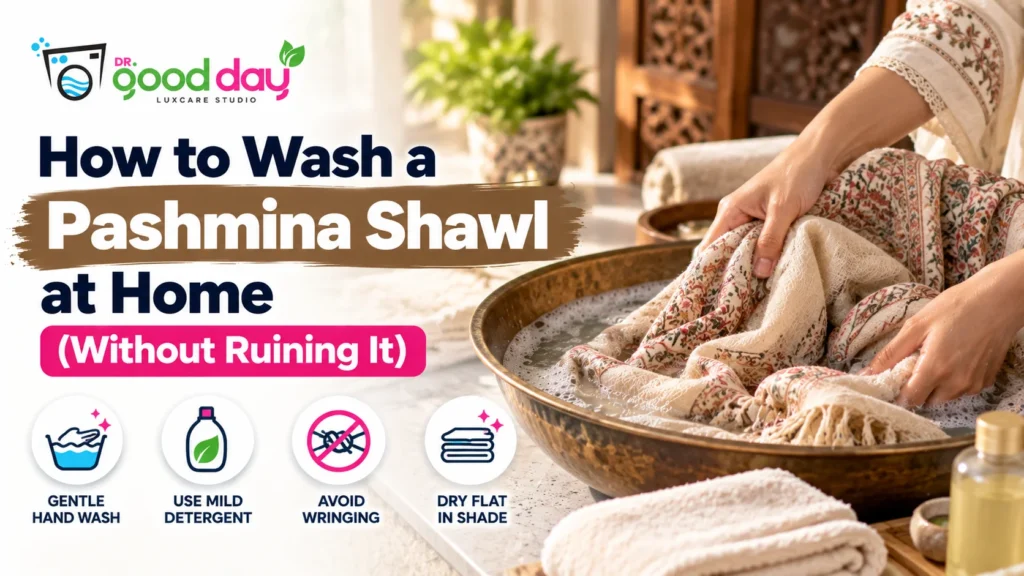
How to Wash a Pashmina Shawl at Home (Without Ruining It)
Pashmina is unforgiving — one hot wash or one hard scrub can felt the fibre permanently.
Here’s exactly how to wash one safely, and how to tell when it’s not a home-wash job at all.
Pashmina is one of the most delicate fibres you’ll ever put through a wash, and also one of
the least forgiving of mistakes. Unlike cotton, which can shrug off a slightly-too-hot wash,
pashmina can be permanently ruined in a single cycle. The good news: washing one at home
safely isn’t complicated, it just requires doing a few specific things differently from how
you’d wash anything else in your wardrobe.
Why pashmina is so easy to ruin
Pashmina comes from the soft undercoat of Himalayan mountain goats, and the fibre is finer
and more delicate than regular sheep’s wool. That fineness is exactly what makes it feel the
way it does — and exactly why heat and agitation are so damaging. Hot water and rubbing
cause the microscopic scales on wool fibre to lock together permanently, a process called
felting. Once pashmina felts, it goes stiff, shrinks, and loses the soft drape that makes it
valuable in the first place. There’s no undoing it at home once it happens.
The step-by-step method
Check for a Woolmark or care label
If it says hand-wash-only, follow that exactly. If it says dry-clean-only, don’t attempt a home wash at all — send it for professional care instead.
Fill a basin with cold water
Cold or barely lukewarm — never hot, and never straight from a geyser tap without checking the temperature first.
Add a wool-safe detergent
Use a small amount of a pH-neutral, wool-specific detergent. Regular laundry detergent is often too alkaline for delicate wool fibre.
Submerge and press gently
Press the shawl through the water repeatedly. Never rub, twist, or scrub — any friction risks felting the fibre.
Rinse thoroughly in cold water
Change the water and rinse until every trace of soap is gone, handling the shawl just as gently as during washing.
Remove water without wringing
Lay the shawl flat on a dry towel and roll both together to press out water. Wringing or twisting stretches and distorts the fibre.
Dry flat, away from heat and sun
Reshape the shawl to its original size while damp, then let it dry flat on a towel, away from radiators, direct sunlight, or any heat source.
Do this, not that
✓ Do
- Use cold water only
- Use a wool-specific, pH-neutral detergent
- Press gently through the water
- Dry flat on a towel, reshaping as you go
- Check the label before you start
✗ Don’t
- Use hot or even warm water
- Rub, scrub, or twist the fabric
- Wring it out like regular laundry
- Hang it to dry — the weight stretches it out of shape
- Use regular detergent or bleach
The felting test: if a pashmina ever comes out of a wash feeling
noticeably stiffer, thicker, or less drapey than before, that’s felting, not just
“shrinkage.” It’s permanent, which is exactly why prevention matters more than any fix.
What Woolmark certification actually tells you
You’ll often see a Woolmark label on genuine pashmina and fine wool products. It’s a
recognised quality certification for wool fibre, and it usually comes with specific care
instructions — hand wash only, or dry clean only — that are worth following exactly rather
than treating as a generic suggestion. A Woolmark label saying “do not dry clean” means
exactly that; one saying “dry clean only” means home washing is a real risk, not just an
inconvenience to skip. When a provider advertises Woolmark-certified processing, it means
their equipment and process are specifically suited to handling wool fibre without the risk
of felting or shrinkage that a standard wash cycle carries.
Hand wash vs. professional cleaning: how to decide
| Hand wash at home | Professional cleaning | |
|---|---|---|
| Best for | Plain, undyed or simply dyed pashmina in good condition | Embroidered, hand-block-printed, heavily worn, or stained pashmina |
| Risk level | Low, if the steps above are followed exactly | Lowest — equipment and process built specifically for wool fibre |
| Best when | Light, routine freshening between wears | Deep cleaning, stain removal, or before long-term storage |
If a pashmina is old, sentimental, heavily embroidered, or simply expensive enough that a
mistake would genuinely hurt, professional Woolmark-certified cleaning is worth the cost of
not risking it yourself.
How often does a pashmina actually need washing?
Far less often than you’d think. Pashmina isn’t worn directly against sweat the way a shirt
is, and over-washing does more harm than good to delicate wool fibre. Airing it out after
wear and spot-cleaning any specific marks is usually enough for everyday use. A full wash a
few times a season — not after every single wear — keeps it in far better condition long
term.
Dealing with a specific stain, without a full wash
If only one spot needs attention, a full wash isn’t necessary and adds unnecessary risk.
Dab the stain gently with a cloth dampened in cold water and a tiny amount of wool-safe
detergent, working from the outside of the stain inward so it doesn’t spread. Avoid rubbing.
For anything beyond a light mark — oil, makeup, or anything already set in — professional
stain treatment is safer than attempting it yourself, since aggressive home stain removal is
one of the more common ways pashmina gets damaged.
Frequently asked questions
Can I wash a pashmina shawl at home?
Yes, a plain pashmina shawl can be hand washed at home in cold water with a wool-safe detergent, gentle handling, and flat drying. Heavily embroidered or hand-dyed pashmina is safer left to professional Woolmark-certified cleaning.
Can I machine wash a pashmina shawl?
No. Machine washing, even on a wool or delicate cycle, risks felting the fibres through agitation, which permanently changes the texture and can’t be reversed.
Why did my pashmina shawl shrink or go stiff after washing?
This is usually felting, caused by hot water, harsh agitation, or regular detergent reacting with the wool fibre. Once felted, pashmina cannot be restored to its original softness.
What does a Woolmark label mean for a pashmina shawl?
A Woolmark label certifies the fibre meets recognised quality standards for wool, and often specifies whether the item should be hand washed only or requires dry cleaning, which should be followed exactly.
How often should a pashmina shawl be washed?
Pashmina needs washing far less often than everyday clothing — airing it out after wear and spot-cleaning marks is usually enough, with a full wash only a few times per season.
Not sure if it’s safe to wash at home?
Send us a photo on WhatsApp and we’ll tell you honestly whether your pashmina needs professional Woolmark-certified care instead.