



A new black kurta, a bright red shirt or a pair of dark jeans can leave unwanted colour on your other clothes during the first wash. This is called colour bleeding in laundry, and it can turn a favourite white shirt pink or leave pale fabrics looking dull.
The good news is that a few simple laundry habits can reduce the risk. If you have recently bought new clothes for everyday wear, work or Kashmir's colder months, sorting garments correctly, checking for loose dye and choosing the right washing method can help protect your wardrobe.
What Is Colour Bleeding in Laundry?
The occurrence of colour bleeding is characterised by dye leakage from one piece of clothing during laundering and its transfer to another cloth. Colour bleeding can take place as a result of unstable dye coming into contact with the washing water, particularly while washing new, bright or dark clothes along with lighter ones. The textile term for a dye's ability to stay put is colour fastness.
For instance, laundering a new maroon kurta alongside white cotton garments can result in pink stains on the latter. Such an issue can arise with dark denim jeans, navy blue shirts, red dupattas and many more coloured clothes.
Colour bleeding should not be confused with colour fading. While bleeding results in transfer of colour to another garment, fading is concerned with loss of colour intensity of the original garment.
Why Do New Clothes Bleed Colour During Washing?
There are several ways to make colour transfer more likely to happen.
1. Unstable or excess dye
Some types of clothes have more dye in them than others. Newly bought clothes are not washed several times and their colour stability may be questionable. Saturated colours such as bright red, deep blue and black should be taken into account.
2. Mixing light and dark coloured clothes in the wash
Combination of colours is one of the most frequent causes of colour transfer. Dye may leach from a dark piece of clothes and stain light clothes such as white, cream, light pink or light grey.
3. Too hot water
Some dyes leach out easily in hot water. Cool water is a better choice when washing new coloured clothes unless the care instructions say otherwise.
4. Soaking clothes for a long time and using the wrong washing cycle
Soaking coloured clothes for a long time and using a wrong cycle increases the chance of dye leaching and colour transfer. An aggressive wash cycle can harm delicate fibres.
5. Wrong detergent or way of washing
Unsuitable detergent for the fabric type, too much detergent and an aggressive washing process may affect colour retention.
How Can You Prevent Colour Transfer When Washing New Clothes?
The most effective approach is to separate uncertain colours, follow the care label and avoid unnecessary exposure to heat and friction.
1. Always do the first few washes on their own
Never toss a brand new dark or brightly coloured piece of clothing in the mix right away.
It must be washed on its own during the first wash, if the label states that there is a chance that the colour might bleed. Keep them separated until you can reasonably see that the dye is stable.
This applies especially to new black trousers, dark denim, red shirts, colourful kurtas and dark winter wear.
2. Separate your laundry by colours
Prior to running your washing machine, separate your clothes into different piles according to the following colours:
- Whites: White shirts, socks, towels, etc.
- Lights: Cream, beige, pastel pink, pale blue, light grey.
- Darks: Black, navy, dark brown, maroon, dark green.
- Brights: Vibrant reds, oranges, purples and other colours that may bleed dye.
Delicates should be separated from heavy clothes like jeans and trousers.
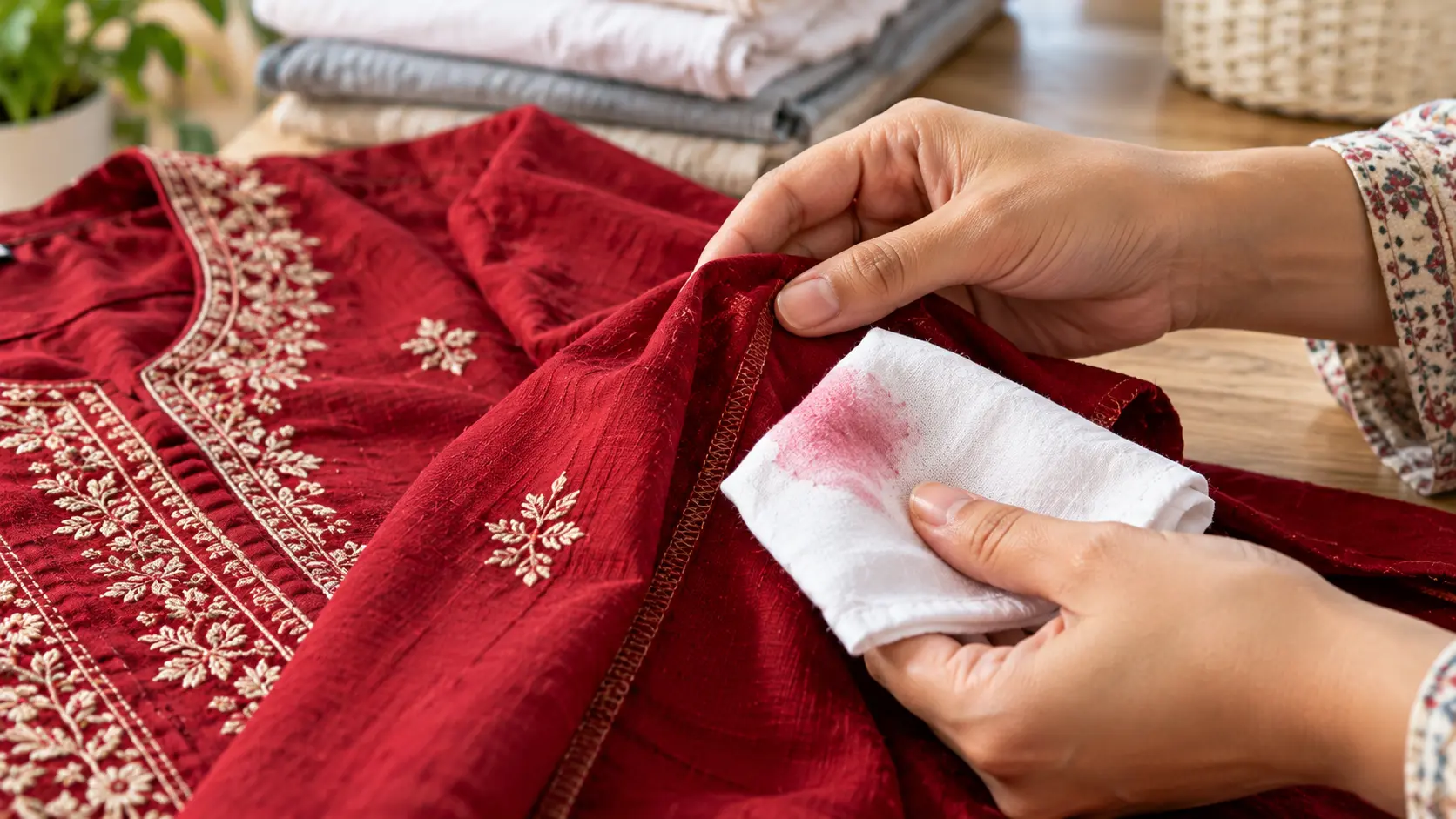
3. Conduct a colourfastness test
This is a straightforward test that can help you to identify clothes that can release dye.
- Moisten a piece of white fabric with cold water.
- Identify a small and inconspicuous spot on the clothes.
- Rub or dab the moist piece of fabric against the spot of the clothing.
- Find out if there is any transfer of colour to the white fabric.
If the fabric absorbs colour from the spot, then you must avoid washing the clothes together with clothes of light colours. Wash it separately.
Note: Even if the colourfastness test yields negative results, it is important to remember that it is not a guarantee that the clothes will not release any dye when it is being washed.
4. Always use cold water, where applicable
Cold water can go a long way in helping you to minimise dye release from clothes. This is a sensible starting point for your new clothes, especially where the care label specifies cold or cool water washing.
It is important not to make the mistake of assuming that all clothes require cold water washing. Always adhere to the manufacturer's instructions.
5. Invert coloured clothes
Inverting clothes will help prevent friction from coming into contact with the outer side of the clothes when washing. This will also keep any printed designs safe from unnecessary friction.
It is especially useful when it comes to dark coloured jeans and T-shirts with prints. It does not prevent the unstable dye from running, but you need to separate the new clothes from white and light-coloured ones.
6. Opt for a suitable detergent and wash cycle
It is important to use the correct detergent for the particular garment and washing machine. You also need to pick an appropriate wash cycle for delicate materials and avoid overloading the drum.
Overloading the drum prevents effective movement and rinsing of clothes.
7. Don't use excessive soaking
Soaking clothes for too long is not a method that helps to avoid colour bleeding. On the contrary, such treatment provides more chances for the dye to go into the water.
If you have the possibility to wash your clothes by hand, then do it carefully without excessive soaking. It is impossible to soak a new brightly coloured item of clothing together with other garments.
8. Take clothes from the washer quickly
As soon as the washing ends, remove the items and sort them for drying.
Do not keep wet clothes stacked in the washer or piled up. The release of dye in the clothes may result in additional colour contamination.

Which Clothes Need Extra Care in Srinagar?
The wardrobe in Srinagar will generally consist of an assortment of cotton clothing, dark clothing for winters, woollen clothes, and traditional attire. Each one of these may have specific washing instructions to follow.
New kurtas and traditional attire
Colourful dyed kurtas or outfits with contrasting colour panels or embroidery may require segregation in terms of laundry. A dress with red embroidery on a pale background would require a gentler approach compared to plain cotton shirts.
Always look out for instructions from the manufacturer, and do not consider the complete outfit to be washable cotton if the embroidery part needs special attention during washing. Our tailoring and embroidery care is made for such outfits.
Pherans and winter attire
There may be wool, embroidery work, lining, or other decorations in pherans. Never assume all pherans can be machine washed without thinking much about their contents.
Always take instructions from the label or ask the experts before taking any pheran for washing.
Dark jeans, jackets and sweaters
Dark new denims and winter clothing may have dyes that leach into other garments. Separate these garments until they behave predictably and keep them separate from light coloured fabrics.
Delicate fabrics such as wool will need special detergent and handling too. There are different ways of cleaning according to construction. The Woolmark Company's guide to washing wool is a helpful starting point.
Pashminas and delicate shawls
It is important not to use normal laundry principles when caring for delicate garments such as pashminas and shawls. These garments may need special care according to the fibre type and dyes.
A shawl that has different colours, embellishments or questionable colourfastness will require professional cleaning.
What Should You Do If Colour Has Already Bled Onto Your Clothes?
Act swiftly but without any drastic measures that could make the staining more difficult to treat.
- Keep affected garments separated. Take off the item that caused the staining and separate the stained pieces from other laundry.
- Avoid drying the stained garments for the time being. Drying may exacerbate certain dye transfer stains.
- Check the care label. Check what cleaning products and at what temperature the affected fabric may be safely cleaned.
- Apply a safe stain remover. In case the fabric is washable, the right colour transfer remover can be used. Follow the instructions for use and test the product first.
- Repeat the washing cycle when necessary. Wash the affected garment separately using the right detergent according to the care label instructions.
- Check the result before drying. If the colour persists, refrain from using heat and get professional advice rather than keep on treating the fabric with increasingly harsh chemicals.
A mild detergent and cold water may be sufficient for some washable fabrics, but they won't eliminate all dye transfer stains. Do not combine any chemicals and use bleach only on white and colour-safe fabrics.
When Should You Choose Professional Laundry Care?
While there are a lot of clothes which can be washed at home, there are others that require a special approach.
In case of:
- Woollen clothes which can easily shrink or distort.
- Pheran with embroidery, lining or different colours.
- Costly pashmina shawls and other traditional clothes.
- Clothes which are labelled as dry-cleaning only.
- Garments which have had colour bleeding before.
- Costly garments which may get damaged because of inappropriate washing at home.
People who live in Srinagar can consider Dr. Good Day Laundry Service as an option. It is recommended to tell about the problem with colour bleeding or staining before sending a garment for professional cleaning. Not sure which service you need? Read the difference between laundry and dry cleaning.
Professional cleaning does not mean that all unstable dyes will stay as they are, but preliminary evaluation will minimise the risk of possible problems.
You can check our pricing and full services list, or find a dry cleaner near you in Srinagar.
We offer doorstep pickup and delivery in HMT, Nowgam, Soura, Maloora, Humhama and Bemina.
Next Steps
Before you wash your next load of fresh clothes, make sure to spend some time reading the labels, separating your whites and darks, and testing clothes with doubtful dye. These simple precautions will help to preserve your regular clothes and avoid costly accidents.
In case your delicate clothes or an important Kashmiri suit requires special care, consider having it checked by a professional before taking the risk of washing it at home.
The care of your clothes begins even before putting them into the washer.
Dr. Good Day Luxcare Studio offers laundry and dry cleaning in Srinagar with doorstep pickup and delivery.
Book a Pickup WhatsApp UsQuestions? Contact us, learn about us, or read more garment-care tips on our blog.
Frequently Asked Questions
Can I wash new clothes with old clothes?
It is safer to wash new, strongly coloured garments separately at first. Once you have checked the care label and have reason to believe the dye is stable, you can sort them with compatible colours. A previous wash without visible bleeding is helpful, but it is not an absolute guarantee.
Does salt prevent colour bleeding in laundry?
Salt is not a dependable universal fix for colourfastness. Whether dye remains stable depends on the fibre, dye chemistry and manufacturing process. Do not rely on salt water to lock colour into a finished garment.
Does vinegar stop new clothes from bleeding colour?
Vinegar is not a reliable solution for every type of fabric dye. Adding it to the wash may not prevent colour transfer and could be unsuitable for some garment finishes. Follow the care label and use products designed for the fabric when needed.
Should I wash new black clothes separately?
Yes, washing a new black garment separately for the first wash is a sensible precaution. Keep it away from whites, pale colours and delicate fabrics until you have checked whether it releases dye.
Can colour bleeding be reversed?
Sometimes. Fresh dye transfer may respond to a suitable colour-transfer treatment, but results depend on the fabric, dye and how long the stain has been present. Avoid drying the affected garment until you have checked whether the colour has been removed.
Is cold water enough to stop colour bleeding?
No. Cool water can reduce the risk for many garments, but it cannot guarantee that dye will not escape. Proper sorting, colourfastness testing and following the care label are still necessary.