



Kashmir's changing seasons can take a toll on fabric sofas, upholstered chairs and other soft furnishings. Dust settles into the weave, damp weather can leave upholstery feeling musty, and prolonged exposure to sunlight may fade colours. With the right fabric furniture care in Kashmir, you can keep your furniture cleaner, fresher and in better condition throughout the year.
The key is to adjust your cleaning routine to the season, deal with spills before they set, and avoid cleaning methods that damage delicate upholstery. Whether you have a fabric sofa in your Srinagar home or upholstered dining chairs in a family living room, a few practical habits can make everyday maintenance easier.

How Does Kashmir's Weather Affect Fabric Furniture?
Kashmir's climate changes considerably between seasons. Each brings different challenges for upholstered furniture, so a single cleaning routine may not work throughout the year.
- Spring: Dust, pollen and dirt entering through open windows can collect on sofas and cushions.
- Summer: Strong sunlight through windows may fade upholstery, while everyday use adds sweat, body oils and surface grime.
- Autumn: Fallen leaves, outdoor dust and increased indoor activity can make furniture dirtier.
- Winter: Closed windows, limited ventilation and damp conditions in some homes can contribute to musty odours and slow drying.
The impact depends on your home's ventilation, heating, sunlight exposure and the fabric itself. Furniture near windows, exterior walls or frequently used entrances may need more attention than pieces in less exposed areas.
Spring Furniture Care: Remove Dust Before It Settles
Spring is a good time to give your upholstery a thorough inspection. As windows open more frequently, fine dust and outdoor particles can settle on cushions, armrests and fabric seams.
Vacuum sofas and chairs regularly
Use a vacuum cleaner with an upholstery attachment to remove loose dirt from the seat, backrest, armrests and crevices. Pay particular attention to areas where crumbs, hair and dust collect.
For households with children or pets, vacuuming two or three times a week may be helpful. In less frequently used rooms, once a week may be enough.
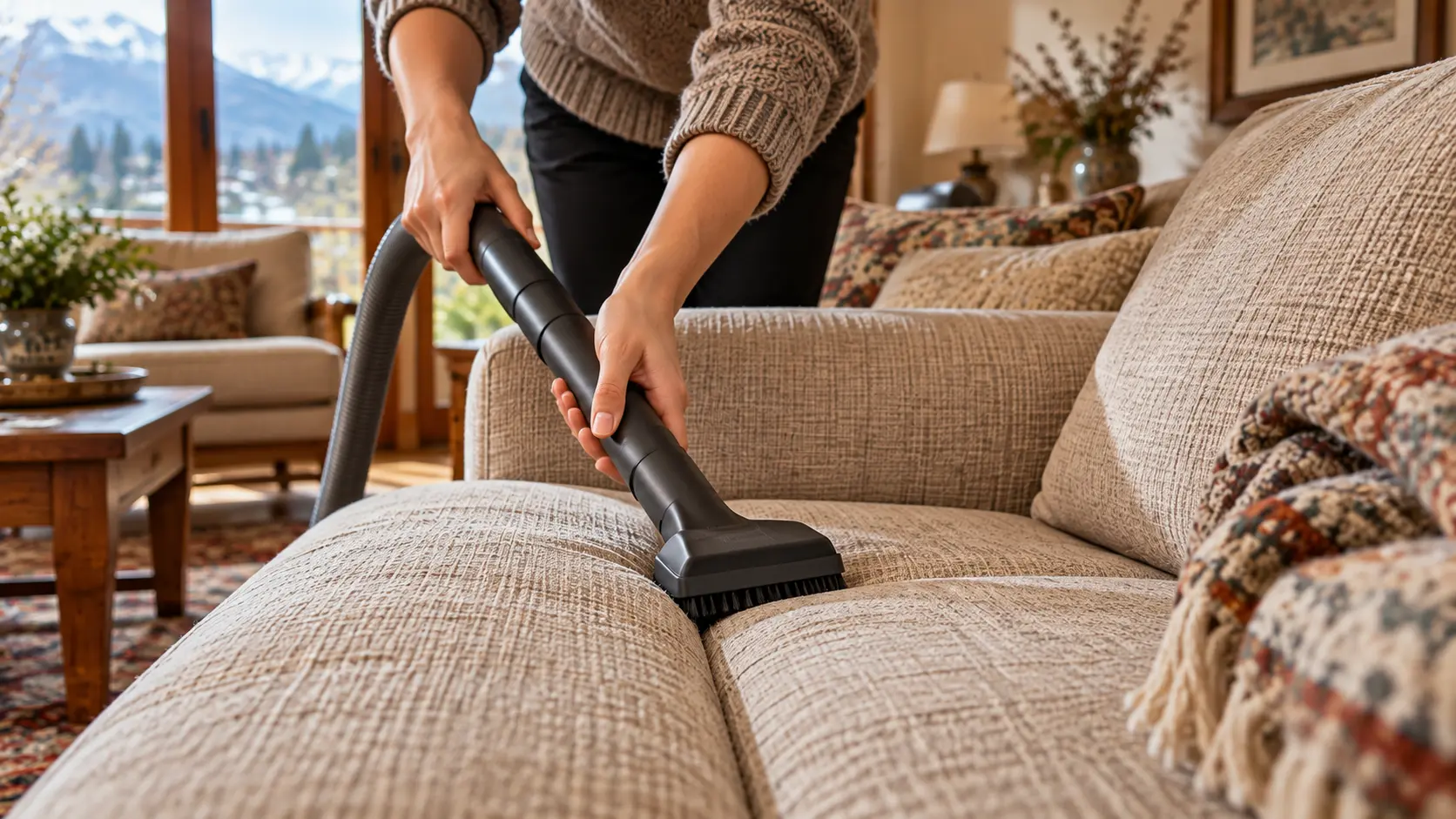
Clean cushions and hidden areas
Remove loose cushions if the furniture design allows it. Vacuum underneath them and inspect the seams for accumulated dirt.
Check the care label before washing any removable cushion cover. A cover that looks washable may shrink, lose colour or change texture if cleaned incorrectly.
Avoid dry dusting that spreads particles
Wiping upholstery with a dry cloth can push fine particles deeper into the weave or release them into the air. Vacuuming is generally a better first step, followed by a suitable fabric-safe cleaning method when needed.
Summer Furniture Care: Protect Fabric From Heat and Sunlight
Sunny days are useful for airing out rooms, but direct sunlight can gradually fade certain upholstery fabrics. Heat can also affect some synthetic materials and fabric finishes.
Keep furniture away from prolonged direct sunlight
If sunlight falls directly on your sofa for several hours each day, consider using curtains or blinds during the brightest part of the afternoon.
You can also rotate movable cushions periodically to help distribute normal wear and fading more evenly.
Deal with sweat and body oils
Headrests, armrests and frequently used seats can develop darker patches as body oils and everyday grime accumulate.
Vacuum these areas regularly. If marks remain, check the manufacturer's cleaning instructions and test an appropriate upholstery cleaner on a hidden area before treating the visible surface.
Avoid soaking the fabric. Excess moisture can penetrate the padding, leave water marks or create drying problems.
Keep food and drinks away from delicate upholstery
Summer gatherings often mean more snacks and beverages around the living room. Using washable throws in high-use areas can help protect the original fabric from spills and friction. See our home fabric care page for related household fabric services.
If a spill occurs, blot it promptly with a clean, absorbent cloth. Rubbing may spread the stain and damage the fibres.
Autumn Furniture Care: Prepare for More Time Indoors
Autumn is a useful time to prepare your furniture for the colder months. As temperatures fall, families may spend more time indoors, increasing the amount of daily use sofas and chairs receive.
Give upholstery a seasonal clean
Vacuum the entire piece, including the back, sides and areas beneath removable cushions. Inspect the fabric for stains that may have gone unnoticed during the summer.
Treat visible marks according to the upholstery care label. If the stain is old, widespread or difficult to identify, professional assessment may be safer than repeated home treatments.
Check for dust around windows and entrances
Furniture near windows, balconies and entrances can collect dust carried in from outside. Cleaning window sills, floors and nearby surfaces also helps prevent dust from settling back onto freshly cleaned upholstery.
Inspect fabric before covering furniture
If you use furniture covers during the colder months, clean and dry the upholstery first. Covering damp furniture can trap moisture and contribute to unpleasant smells.
Choose a cover that allows some air circulation rather than wrapping the furniture tightly in an impermeable material.
Winter Furniture Care: Prevent Dampness and Musty Odours
Winter deserves special attention in Kashmir. In homes with limited ventilation, condensation or damp patches, upholstered furniture may take longer to dry after cleaning. Fabric and padding that remain damp can develop persistent odours.
Keep furniture away from damp walls
Where possible, leave a small gap between sofas and exterior walls that are prone to condensation. Inspect the wall and the back of the furniture periodically for signs of dampness.
If you notice persistent moisture, mould or a musty smell that returns after cleaning, investigate the source instead of masking the odour with fragrance. The US Environmental Protection Agency's guide to mold and moisture explains why controlling indoor moisture is the key to preventing mould.
Ventilate rooms when conditions allow
Open windows briefly when the weather and outdoor conditions permit. Use suitable ventilation or dehumidification if indoor moisture is a recurring problem.
Avoid placing furniture so close to heaters that the fabric is exposed to excessive heat. Always follow the heater manufacturer's safety guidance.
Avoid cleaning upholstery on damp days without a drying plan
A wet-cleaning method that works in warm weather may leave furniture damp for much longer in winter.
Before using water or an upholstery cleaning solution, consider the room temperature, airflow, fabric type and manufacturer's instructions. Do not use a sofa again until the fabric and padding are completely dry.
If the furniture has become soaked, professional assessment may be appropriate, particularly if moisture has reached the inner padding.
How Can You Keep Fabric Furniture Clean Throughout the Year?
Fabric furniture care in Kashmir becomes easier when you follow a consistent routine instead of waiting for visible dirt to build up.
A simple maintenance schedule can help.
| Frequency | What to do |
|---|---|
| Daily | Blot fresh spills and remove loose crumbs |
| Weekly | Vacuum seats, cushions, armrests and crevices |
| Monthly | Inspect seams, cushion covers and frequently touched areas |
| Seasonally | Check for fading, stains, musty odours and signs of dampness |
| As needed | Arrange suitable cleaning for persistent stains or embedded dirt |
Adjust this schedule to your household. Homes with young children, pets, frequent visitors or heavy furniture use may need more frequent cleaning.
Which Cleaning Methods Are Safe for Fabric Sofas?
The safest method depends on the upholstery material and its care label. A technique suitable for one sofa can damage another.
Before using a cleaning product, look for the manufacturer's instructions. Upholstery labels may use the following codes (see this guide to fabric cleaning codes for more):
- W: Water-based cleaning products may be suitable.
- S: Solvent-based cleaning products may be required.
- W/S: Either water-based or solvent-based products may be permitted.
- X: Vacuuming or light brushing only, unless the manufacturer specifies another method.
These codes are common, but not every manufacturer uses them. Always follow the specific instructions supplied with your furniture.
Follow these basic precautions
- Vacuum first. Remove loose dirt before applying any cleaning solution.
- Test in a hidden spot. Check for colour transfer, fading, texture changes or water marks.
- Blot rather than scrub. Work gently from the outside of a spill towards the centre.
- Use minimal moisture. Avoid saturating the fabric or inner cushioning.
- Allow complete drying. Keep the area ventilated and do not replace cushions while they remain damp.
Avoid mixing household cleaning chemicals. Bleach, harsh detergents and unsuitable solvents can cause permanent damage.
How Should You Remove Common Stains From Fabric Furniture?
Different stains require different approaches. Acting quickly helps, but using the wrong product can make the problem worse.
Tea and coffee stains
Blot the spill immediately with a clean, absorbent cloth. Avoid rubbing, which can spread the liquid across the upholstery.
Once the excess liquid is removed, follow the fabric's cleaning instructions. Some upholstery materials may develop rings or discolouration if treated with too much water.
Food and sauce stains
Lift solid food gently with a spoon or blunt edge. Do not press it into the fibres.
Use a suitable upholstery cleaning method based on the fabric label. Oily foods may need a different treatment from water-based spills.
Ink marks
Ink can spread rapidly and may be difficult to remove without affecting the fabric dye. Avoid rubbing the mark or applying alcohol and other solvents without confirming that the material can tolerate them.
For valuable furniture or a large ink stain, seek advice from a qualified upholstery cleaner.
Unpleasant odours
Start by identifying the cause. Food residue, pet accidents, spilled liquids and moisture trapped inside the padding require different treatments.
Surface fragrance may hide the smell temporarily without resolving the underlying problem. If odours persist, inspect for hidden moisture and consider professional cleaning where appropriate.
When Should You Consider Professional Upholstery Cleaning?
Routine vacuuming handles loose dust, but it cannot always remove deeply embedded dirt or stains that have penetrated the upholstery.
Consider professional help when:
- Stains remain after appropriate home treatment.
- The sofa has widespread discolouration or accumulated grime.
- Upholstery has developed a persistent odour.
- The fabric is delicate, valuable or labelled for specialist cleaning.
- A spill has penetrated the inner padding.
- Previous cleaning attempts have left water marks or uneven patches.
Before booking, ask the provider whether they clean upholstered furniture specifically. Laundry and garment dry cleaning do not automatically include sofa or upholstery cleaning. You can check what we offer on our services page, read about our deep cleaning services in Srinagar, or contact us to confirm before arranging anything.
For Kashmir households, it is also worth asking how the furniture will be cleaned and dried during colder months. A suitable method should account for the fabric, the extent of soiling and the conditions inside your home.
Common Fabric Furniture Care Mistakes to Avoid
Small cleaning mistakes can leave lasting marks on upholstery. Watch out for these habits:
- Scrubbing aggressively: This can distort fibres and spread stains.
- Using too much water: Moisture may penetrate the padding and take a long time to dry.
- Applying random household cleaners: Products designed for hard surfaces may damage upholstery.
- Ignoring care labels: Different fabrics need different cleaning methods.
- Leaving spills untreated: Some liquids and oils become harder to remove as they settle.
- Covering damp furniture: Trapped moisture can contribute to unpleasant odours.
- Assuming every sofa needs the same treatment: Material, dye, construction and finish all affect cleaning choices.
The best approach is gentle, regular maintenance combined with the correct cleaning method for your particular furniture.
Next Steps: Build a Seasonal Furniture Care Routine
Start with a quick inspection of the sofas and upholstered chairs in your home. Look for dust in the seams, fading near windows, stains on armrests and any musty smells that could indicate trapped moisture.
Then take three practical steps:
- Vacuum your most frequently used furniture thoroughly.
- Check the manufacturer's cleaning instructions before treating stains.
- Plan a seasonal inspection before winter, when drying conditions can become more challenging.
If a stain persists or the fabric needs specialist attention, contact a provider that specifically offers upholstery cleaning and confirm the service before arranging an appointment.
A little regular care can help your furniture stay cleaner and more comfortable, whatever the season brings to Kashmir.
Questions? Contact us, learn about us, or read more care tips on our blog.
Frequently Asked Questions
1. How often should I clean fabric furniture in Kashmir?
Vacuum fabric sofas and chairs at least once a week to remove dust, crumbs and loose dirt. Homes with children, pets or frequent visitors may need more frequent cleaning.
2. How can I protect my fabric sofa from Kashmir's winter dampness?
Keep furniture away from damp walls, ventilate rooms when weather permits, and address condensation promptly. Avoid wet-cleaning upholstery when it cannot dry properly.
3. What is the safest way to remove stains from a fabric sofa?
Blot spills with a clean, absorbent cloth instead of rubbing. Check the manufacturer's care instructions and test a suitable upholstery cleaner on a hidden area before use.
4. Does sunlight damage fabric sofas?
Yes, prolonged direct sunlight can fade upholstery over time. Use curtains or blinds to reduce exposure and rotate removable cushions periodically to distribute wear and fading.
5. When should I get my fabric furniture professionally cleaned?
Consider professional cleaning when stains persist, dirt becomes embedded, unpleasant odours remain, or the upholstery requires specialist care. Confirm that the provider offers furniture and upholstery cleaning before booking.