


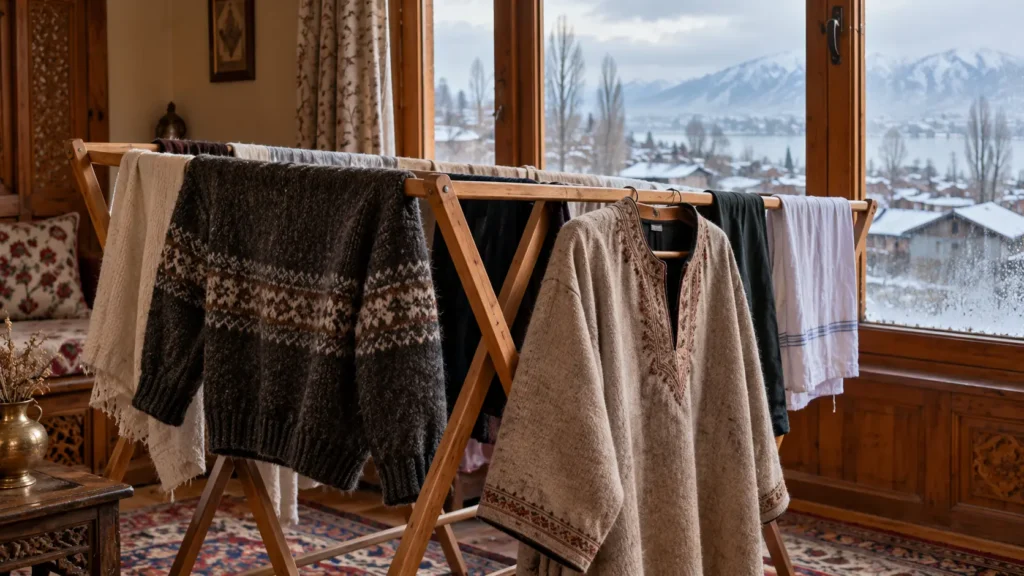
You wash your clothes, hang them near a window, and expect them to dry by the next morning. But during winter in Srinagar, that does not always happen. Sweaters remain damp around the cuffs, towels feel cold and wet, and clothes sometimes develop an unpleasant smell before you get a chance to wear them.
The problem is not always your washing routine. Cold weather, limited sunlight, poor airflow, and excess indoor moisture can all slow down drying. When several of these conditions occur together, even a small load of laundry can take much longer than expected.
For households in Kashmir, this can become a daily inconvenience. Winter clothing is heavier, windows often stay closed to keep rooms warm, and finding enough space to dry everything indoors is not easy.
Here is why it happens, what you can do about it, and when professional laundry care may make life easier.
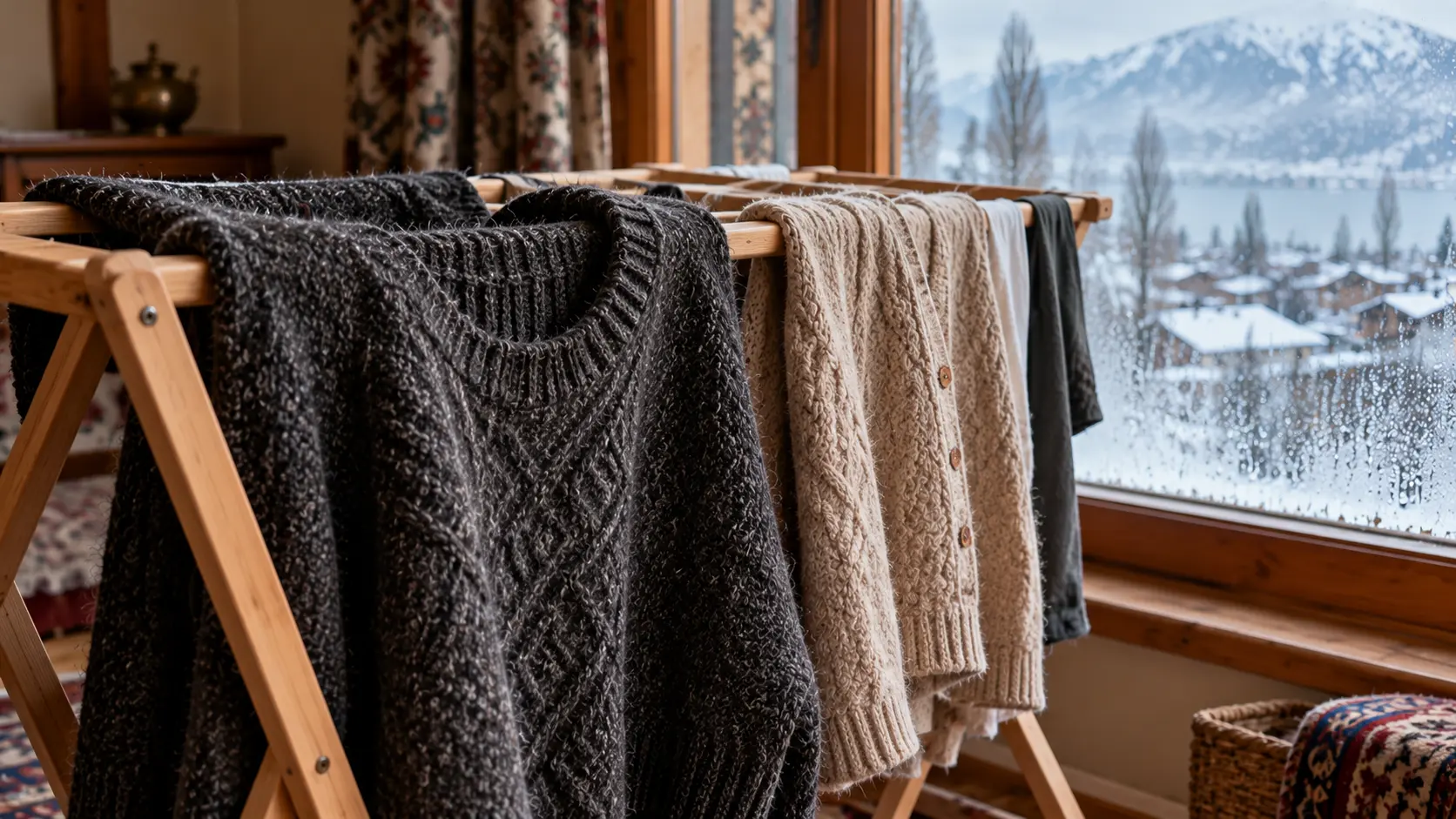
Why Does Laundry Take So Long to Dry in Winter?
Clothes become dry as the water present in the clothes' fibres evaporates into the atmosphere. This process becomes slow when the air is cold, air flow is restricted, or the air in the room is moist.
Many things in our daily lives lead to the above issue.
Low temperatures make the drying process slower
Srinagar's cold winters might make it difficult to dry your clothes outdoors. Clothes which have a thick material take longer to dry, especially when they receive little warmth and air flow.
Such materials include:
- Woollen sweaters and cardigans
- Heavy cotton trousers and jeans
- Pherans and other heavy winter clothes
- Bedsheets and towels
- Winter school uniforms worn together with heavy clothes
A light shirt will dry fast, but a thick sweater will stay wet on the seams and underarms.
One may experience an instance where the exterior of a cloth feels dry but the interior is moist.
Less daytime means less effective sunlight
Sunlight helps to dry the clothes as it heats the clothes up. During winter, it may not be sufficient due to cloudy skies and shorter sunlight hours.
If you put clothes on a balcony, they won't get any sunlight. The only way to do so is to bring them indoors, which means more moisture in your room.
Each item that has been left wet will evaporate water into the environment while drying up.
Closed windows trap moisture indoors
Keeping windows closed during cold weather is understandable. Nobody wants a freezing bedroom just to dry a few shirts.
The downside is that moisture from wet laundry, cooking, bathing, and even normal breathing can accumulate indoors when ventilation is inadequate.
Look for signs such as:
- Condensation on window glass
- A musty smell near the drying rack
- Clothes taking longer to dry with each load
- Damp-feeling cupboards or wardrobes
- Moisture appearing on cold walls or window frames
These signs do not automatically mean your home has a serious damp problem, but persistent moisture deserves attention. The US Environmental Protection Agency's guide to mold and moisture explains why controlling indoor moisture and humidity matters.
Thick winter clothes hold more water
Not every garment behaves the same way after washing.
Heavy cotton, dense knitwear, layered fabrics, and bulky winter garments can retain considerable water. They also take up more room on a drying rack, making it harder for air to circulate between them.
This is particularly frustrating when several family members need clean clothes every day. By the time one load dries, another may already be waiting.
How Can You Dry Clothes Faster Without Making Your Home Damp?
Improving drying does not require any costly gadgets. There are several tips that can help you, yet the best way depends on your room, weather conditions and clothes types.
1. Extract excess moisture from clothing before drying
The most effective way to reduce drying time would be to extract as much excess moisture from the clothing as possible, depending on the material of the item.
Make use of the right spin cycle in the washing machine where possible. Be careful not to use any forceful spinning or wringing for delicate woollen items.
For those woollen items that have to be handled gently, you can squeeze out the excess water using a dry clean cloth and shape the item before drying.
With less moisture, you will ensure that the item releases less moisture into the environment.
2. Provide enough space for all clothes
Drying clothes in a cramped dryer will cause them to stay moist for a longer period than necessary.
Where clothes touch or overlap each other, there is no way in which air will pass freely through the fabric of the garment, especially thick sleeves, folded pants, and bulky sweaters.
You can try these techniques:
- Provide space between the shirts and the trousers.
- Spread the heavier items over a strong drying rack.
- Do not fold any wet clothes on top of themselves.
- Turn suitable garments when one side remains damp.
- Dry bulky items separately if space is limited.
You may find that washing smaller loads is more practical than trying to dry everything.
3. Improve airflow around the drying rack
Air movement helps moisture escape from the surface of wet clothes. Place the rack in a space where air can circulate instead of pushing it into a cramped corner.
When outdoor conditions allow, briefly ventilate the room. A fan can also help move air around the garments.
Remember that a fan moves air but does not remove moisture from the home. If indoor humidity stays high, better ventilation or a suitable dehumidifier may be needed.
Keep the drying rack away from heaters, open flames, and other heat sources. Never drape clothes over a room heater or block its ventilation openings.
4. Check clothes before putting them away
A garment can feel dry on the outside but still contain moisture in its seams, pockets, cuffs, waistband, or underarms.
Check these areas before folding anything.
If the fabric still feels damp or unusually cold, allow it to dry for longer. Putting slightly damp clothes into a closed cupboard can lead to unpleasant smells and may encourage mould growth under suitable conditions.
This small check is especially useful for thick winter clothing that will not be worn again for several days.
Why Do Clothes Smell Musty After Drying Indoors?
A musty smell often develops when clothing stays damp for too long. Microorganisms can grow under favourable conditions, particularly when moisture combines with detergent residue, body oils, and dirt left in the fabric.
Sometimes, the problem begins before the clothes reach the drying rack.
Laundry left sitting in the washing machine after a cycle can develop an unpleasant smell. A dirty machine, too much detergent, or an unsuitable wash cycle may also contribute.
Here is how to deal with it.
- Remove clothes from the machine promptly. Avoid leaving wet laundry sitting in the drum for hours.
- Use the right amount of detergent. More detergent does not necessarily mean cleaner clothes. Residue can remain in the fabric when the product is overused or rinsing is inadequate.
- Clean the washing machine regularly. Pay attention to the detergent drawer, door seal, and other areas where residue can accumulate.
- Make sure clothes dry completely. Do not rely on perfume or fabric fragrance to cover the smell of damp clothing.
- Check the room, not just the clothes. If freshly washed garments repeatedly develop a musty smell, investigate persistent condensation, poor ventilation, or dampness around the drying area.
If you notice visible mould on clothing, handle the item carefully and follow its care instructions. Delicate garments may need professional assessment rather than another round of home washing.
Can Dampness Damage Your Winter Wardrobe?
Yes, particularly when clothes are repeatedly stored before they are fully dry. Persistent moisture can encourage mould or mildew growth, leave lasting odours, and affect the condition of certain fabrics.
Different garments need different care, so avoid treating every winter item the same way.
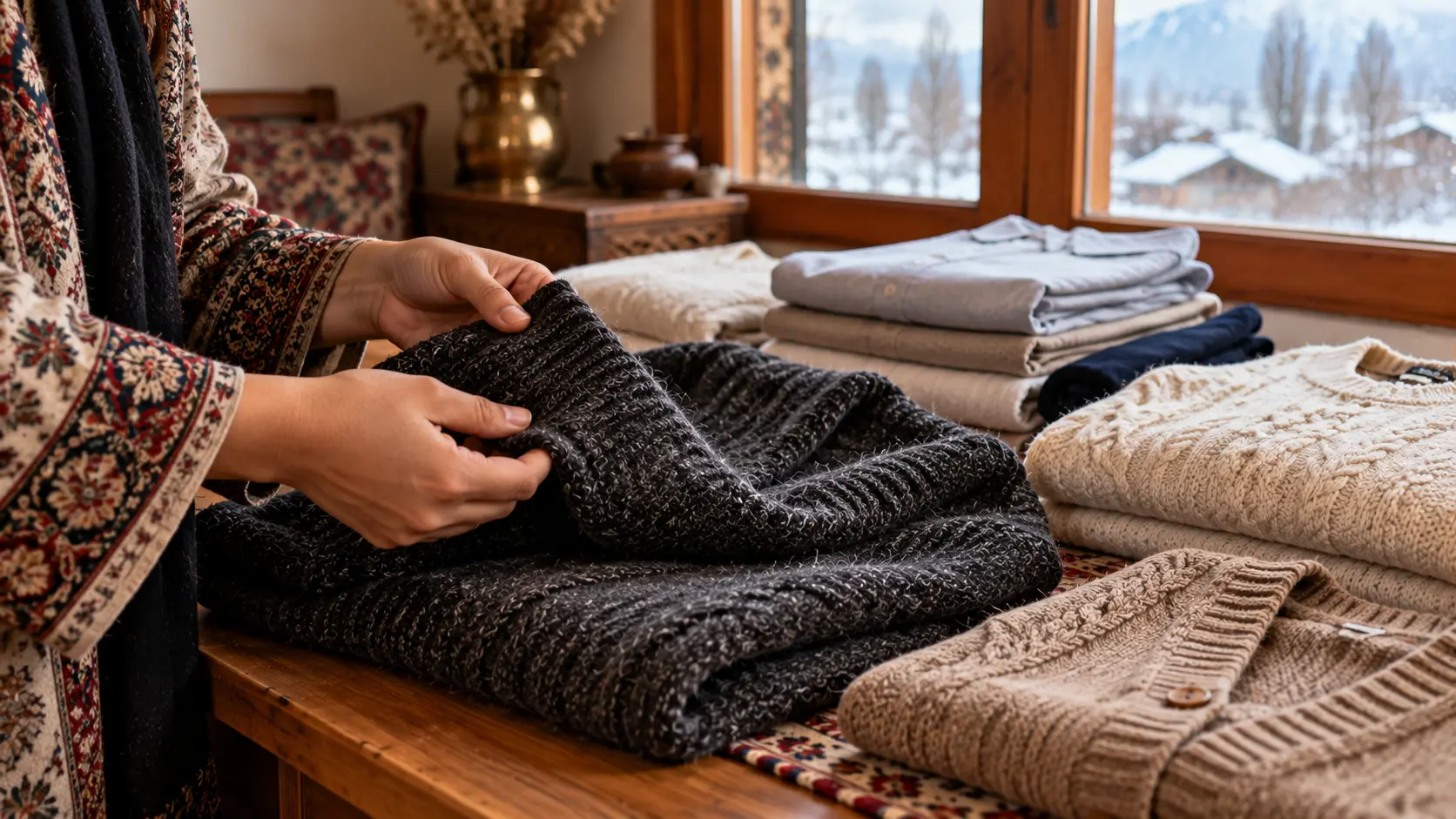
Woollen sweaters and cardigans
Wool can lose its shape when it is washed or dried incorrectly. Excessive heat, rough handling, and unsuitable detergents can also damage the fibres.
Check the care label before washing. Depending on the garment, gentle hand washing, an appropriate machine cycle, or professional cleaning may be suitable. The Woolmark Company's guide to washing wool is a helpful reference, and our guide on cleaning woollen clothes the right way covers more.
When drying a wet woollen sweater, reshape it and lay it flat if the care instructions recommend this. Hanging a heavy, waterlogged sweater can stretch it.
Pherans and other heavy winter garments
A pheran may have a thick fabric, lining, embroidery, or other details that affect how it should be cleaned. See our pheran winter checklist for more.
Do not assume every pheran can be washed in the same way. Check the label and pay attention to any special construction or decoration.
After cleaning, make sure the garment is dry throughout, not just on the outer surface.
Pashmina shawls
Pashmina and other delicate shawls deserve extra care. Strong detergents, rough rubbing, and excessive heat can affect their fibres and finish.
Avoid experimenting with home remedies on an expensive shawl. Follow its care instructions and seek a cleaner experienced with delicate woollens when professional treatment is recommended. Our tailoring and embroidery care also covers delicate, decorated pieces.
Towels, blankets, and bedsheets
Bulky household textiles can be difficult to dry indoors because they occupy so much space and retain moisture in their thicker sections.
If you wash a blanket or bedsheet at home, make sure your drying area can accommodate it without leaving large folds bunched together. For bulky bedding, our home fabric care service can help.
Never store these items while damp, even if you plan to use them again soon.
How to Keep Cupboards Fresh During the Colder Months
Sometimes, the real problem appears after the laundry has been put away. You open a wardrobe after a few days and notice a stale smell, even though the clothes looked clean when you folded them.
Before blaming the detergent, check how the garments were dried and stored.
A few habits can help:
- Store only completely dry clothes. Check thick seams and folded sections.
- Avoid overcrowding wardrobes. Clothes packed tightly together have less room for air circulation.
- Keep clothing away from damp walls. If a wardrobe sits against a wall with persistent condensation, investigate the moisture source.
- Clean clothes before seasonal storage. Sweat, body oils, and food residue can contribute to odours over time.
- Inspect stored winter wear periodically. This is especially useful for garments that remain unused for weeks.
Moisture absorbers may help in some enclosed spaces, but they will not solve a leak, persistent condensation, or a serious damp problem. Address the underlying source whenever possible.
When Is It Worth Using a Professional Laundry Service?
Home washing works perfectly well for many everyday garments. But winter can make the process difficult when clothes take too long to dry, drying space is limited, or delicate items need special attention.
For local households, laundry services in Srinagar can be a practical option when the weather and workload make regular washing harder to manage.
Professional care may be worth considering when:
- Your home has limited space for drying clothes.
- Heavy garments remain damp for extended periods.
- School uniforms and office clothes need regular cleaning.
- Blankets and other bulky items are difficult to manage at home.
- Delicate woollens or structured garments have specific cleaning requirements.
- Musty smells persist despite improvements to your washing and drying routine.
A professional service can take some of the washing and drying workload off your hands. However, the right cleaning method depends on the garment and the facilities available.
Before handing over an expensive or delicate item, explain the problem and ask which cleaning method is suitable. If a garment has visible mould or a persistent odour, mention that as well.
Laundry or Dry Cleaning: What Should You Choose?
The answer depends on the garment, not simply on how cold the weather is.
Laundry generally uses water and detergents. Dry cleaning uses specialised solvents and processes designed for garments that may not be suitable for ordinary washing. Read more on the difference between laundry and dry cleaning.
Use the care label as your starting point.
| Clothing or household item | What to consider |
|---|---|
| Everyday cotton shirts | Regular washing is usually suitable if permitted by the care label. |
| School uniforms | Routine laundering is often appropriate, followed by thorough drying. |
| Woollen sweaters | Check whether hand washing, machine washing, or professional cleaning is recommended. |
| Pherans | Consider the fabric, lining, embroidery, and manufacturer's instructions. |
| Pashmina shawls | Choose a method appropriate for the fibre and finish. |
| Blazers and structured coats | Check whether professional dry cleaning is specified. |
| Blankets and bulky bedding | Consider whether you have enough space and suitable facilities to dry them fully. |
Dry cleaning is not automatically the better choice for every winter garment. Equally, a garment labelled for professional cleaning should not be put through an ordinary home wash just because it looks sturdy.
When in doubt, check the care label or ask a qualified cleaner.
Getting Winter Laundry Under Control in Srinagar
When several loads of laundry are waiting and nothing seems to dry, the problem can quickly become part of your daily routine. Clean clothes occupy chairs, drying racks fill the room, and the next wash has nowhere to go.
Dr. Good Day Laundry Service offers local customers another option when managing winter laundry at home becomes inconvenient. Depending on the garment and available services, professional laundry or dry cleaning may help with everyday clothing and selected items that need special care.
Before booking, it helps to:
- Separate ordinary washing from delicate garments.
- Identify items with persistent damp smells or stains.
- Check which service is suitable for each garment.
- Confirm the price, collection or delivery arrangements, and expected turnaround time.
You can review available options and pricing on the Dr. Good Day pricing page or visit DrGoodDay.com. You can also see our full services list or find a dry cleaner near you in Srinagar.
We offer doorstep pickup and delivery in HMT, Nowgam, Soura, Maloora, Humhama and Bemina.
The aim is not to send every garment for professional cleaning. It is to make winter laundry easier to manage while keeping your clothes in good condition.
Next Steps: Check Your Drying Routine Today
Take a look at the clothes currently drying in your home. Are the garments spaced apart? Is air circulating around them? Are the thicker sections still damp after several hours?
Start with those simple checks. Improve ventilation where possible, avoid overcrowding the drying rack, and never put damp garments straight into a closed wardrobe.
If bulky winter clothes continue to cause problems, consider professional care for the items that are difficult to wash or dry at home. A little planning now can save you from dealing with musty smells and another pile of damp laundry later.
Dr. Good Day Luxcare Studio offers laundry and dry cleaning in Srinagar with doorstep pickup and delivery.
Book a Pickup WhatsApp UsQuestions? Contact us, learn about us, or read more garment-care tips on our blog.
Frequently Asked Questions
Why do clothes take so long to dry in Srinagar during winter?
Cold temperatures, limited sunlight, and poor indoor ventilation can slow evaporation and leave clothes damp for longer.
How can I prevent clothes from smelling musty in winter?
Remove clothes from the washing machine promptly, allow enough airflow while drying, and store garments only when completely dry.
Is it safe to dry clothes indoors during winter?
Yes, provided the room has adequate ventilation. Avoid overcrowding drying racks and watch for condensation or excess indoor moisture.
Should woollen clothes be washed or dry cleaned?
It depends on the garment's care label, fibre, and construction. Some woollens can be washed gently, while others require professional cleaning.
Can laundry services in Srinagar help with winter clothing?
Yes. Professional laundry and dry cleaning services can help with everyday garments, bulky items, and selected delicate winter clothing, depending on the service offered.