


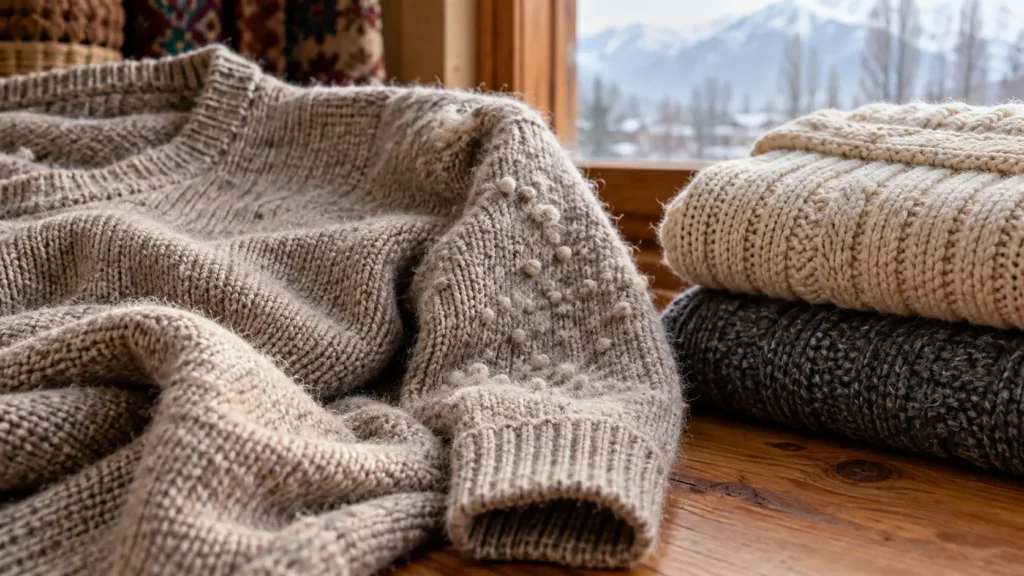
You pick up your most loved woollen sweater from the wardrobe, wear it a few times, and then notice tiny balls of fibres forming around the sleeves and armpits. It looks quite rough even though the garment is still in good condition.
These balls of fibres are known as fabric pills. They appear when loose fibres tangle together because of friction. Woollen sweaters, cardigans and other knitwear are the most affected, especially in winter when we wear layers of clothes.
The positive side is that the problem is quite easy to manage.
What Causes Tiny Balls on Woollen Clothes?
Fabric pilling is a process in which some fibres protrude from the surface of a textile, get rubbed together and form a tangle that becomes tiny balls of fibre.
They can stay on the fabric, forming what are often called bobbles. You are likely to find them in areas that experience the most friction, such as:
- Underarms and sides of sweaters
- Sleeves and elbows
- Places that have contact with jackets or handbags
- The front of the clothing, where it comes in contact with another piece of clothing
Pilling is more common in knitwear because of the way it is constructed, which lets some fibres protrude. For a deeper explanation, see The Woolmark Company's page on what is pilling.
1. Everyday Wear and Friction
In some cases, the balls on your sweater have nothing to do with washing.
Consider the way you wear your clothes in winter. You constantly rub your sleeves against your desk, your shoulder bag rests against your cardigan, and your sweater comes into contact with a coat worn over it. Friction starts every time you move, and fibres form balls because of that continuous friction.
This becomes especially apparent with often-used winter clothes. Areas that are subject to constant rubbing begin to pill earlier than the others.
2. Washing Clothes Too Roughly
Woollen clothes require more tender loving care than most other clothing items. Scrubbing when there is a stain, wringing out moisture from sweaters and using a washing programme that is not right for the type of clothes all cause unnecessary strain on the fibres.
Washing woollens together with heavier clothes like jeans, towels and jackets may increase friction during washing.
When it comes to washing woollen clothes, first look at the care label. Some can be washed in a washing machine and some should only be hand washed. The Woolmark Company also has a helpful guide to washing wool.
3. Using Too Much Detergent or the Wrong Washing Method
More detergent does not necessarily mean cleaner clothes. An inappropriate detergent or inadequate rinsing may leave residue on the item, and this affects the feel of the fabric.
The washing technique is equally important. Water that is too hot, too vigorous rubbing and a sudden change in water temperature can harm some woollen garments by shrinking and distorting them.
For washable wool, use a detergent suitable for wool fabric, according to the instructions on the care label. Remember that not all woollen garments should be treated in the same manner.
4. The Type of Wool and Knit
Not all woollen clothes have the same tendency to pill.
Fibre type, fibre length, yarn construction and knitting method all play a role. Soft, loosely knitted sweaters tend to have problems with pilling before tightly woven garments do, and wool blends may behave in a unique way depending on the fibres used.
But this doesn't mean that soft woollen clothes need to be avoided.
5. Wearing Multiple Layers
Layering is common in winter dressing in Kashmir. For many hours, a sweater will lie under a pheran, jacket or coat, and the fabric layers rub against each other whenever you move.
This rubbing can result in pilling, particularly at the shoulders, sides and sleeves.
You do not have to stop layering your clothing. You just need to be careful about the garments that keep rubbing against each other.
How Can You Prevent Woollen Clothes from Pilling?
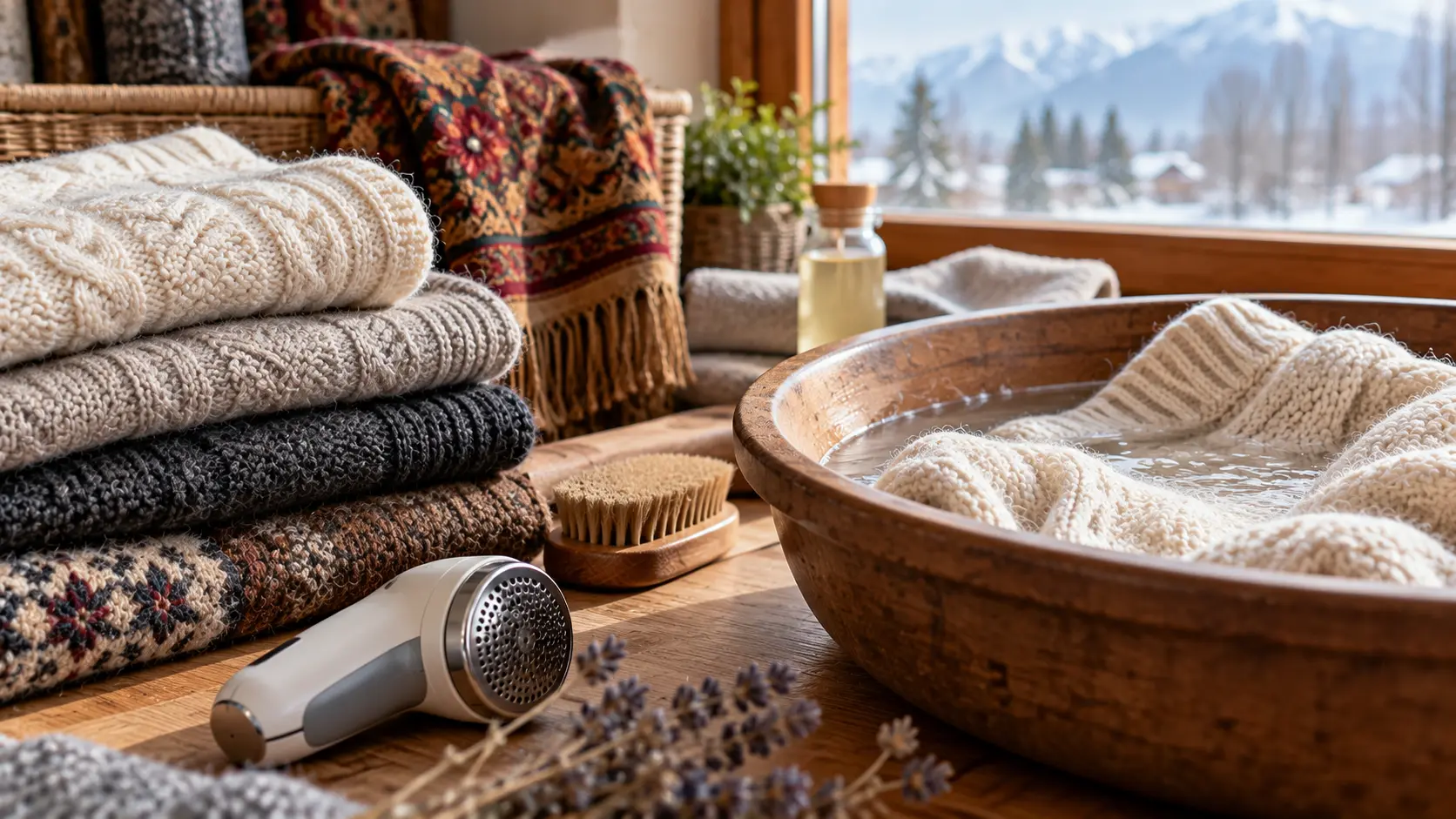
Although pills can never be stopped completely, it is possible to lower the friction and wear.
Flipping a sweater inside out will shield the surface from rubbing against itself while being washed. Before placing the sweater into the washing machine, if allowed according to the care label:
- Close all zips and fasteners that could get entangled in the cloth.
- Separate woollen garments from denim, towels and other heavyweight materials.
- Wash similar colours together.
- Avoid overloading the washing machine.
- If the care label recommends it, place the clothes in a mesh laundry bag.
All of these actions help to minimise unnecessary contact between fabrics.
Select Appropriate Washing Techniques
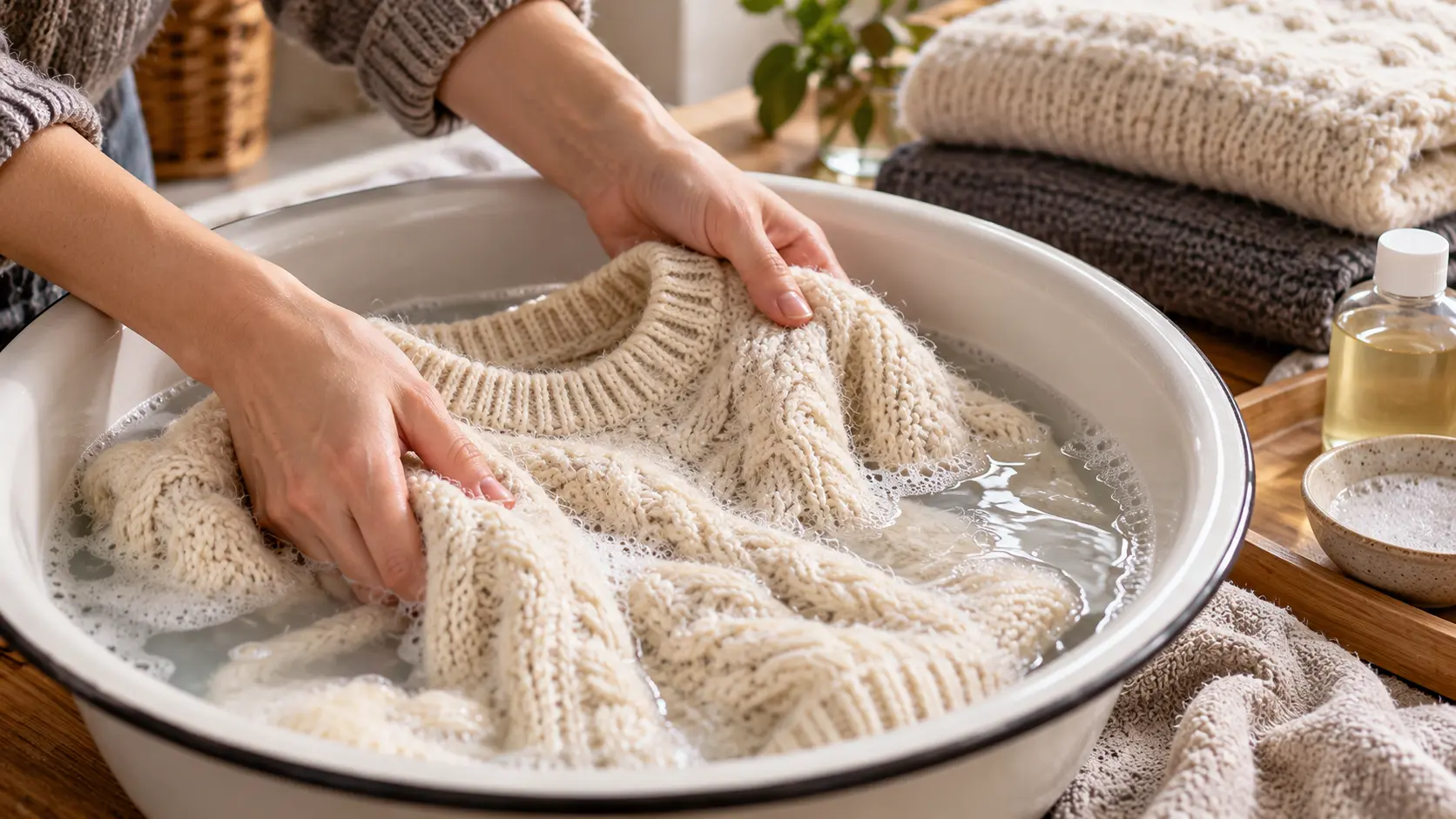
The first thing to do is to refer to the care label of the garment. If the sweater is okay to hand wash (Woolmark has a step-by-step guide on how to wash a wool sweater), it is recommended to wash it with cold or lukewarm water and wool detergent. Follow these steps:
- Fill a sink with water at the desired temperature.
- Add the appropriate amount of recommended detergent.
- Gently work the fabric through the water without rubbing or stretching the sweater.
- Follow the further directions and rinse according to the instructions.
- Press out excess water carefully. Never twist or wring the sweater.
- Reshape the garment and dry it according to its care instructions.
For machine-washable wool, select the recommended wool or delicate programme.
If the label says dry clean only, do not experiment with home washing. Our dry cleaning service is built for garments like these.
Wash Woollen Clothes Only When Needed
Woollen clothing does not necessarily need laundering each time it is worn. If it is clean and has only picked up general body odours, airing it in a well-ventilated area may be all that is required.
Launder it when it is dirty, stained, or needs a proper refresh, and use the cleaning process recommended in the garment's instructions.
Fewer laundry cycles mean less exposure to repeated friction, which is beneficial to the fabric.
Do Not Hang Wet Knit Sweaters
The way you dry woollen clothes determines how they will look.
Do not hang a heavy, wet knitted sweater by its shoulders, since the weight of the water can pull it out of shape. Do not expose woollen clothing to high temperatures or a dryer machine unless the care label says so.
For items that need to be dried flat, reshape them and dry them flat in a dry and clean environment.
Store Winter Clothes Properly
As the weather becomes warmer and it is time to put winter clothes away, make sure all items are clean and fully dried.
Instead of hanging sweaters and cardigans, fold them and store them in a clean, dry place. Do not squeeze too many pieces into one spot.
Before putting away a woollen pheran, sweater or shawl, look out for marks, loose threads and pills. This will make it easier to get them ready for next winter. For bulky winter items like blankets and quilts, you can also use our home fabric care service.
How Do You Remove Tiny Balls from a Woollen Sweater?
If your sweater already has pills, there is a good chance it can be improved without washing it again.
The main thing is to get rid of pills without stretching the underlying fibres. Woolmark's pilling factsheet covers removal in more detail. Here are some techniques:
- A fabric comb: A wool comb can help remove pills from suitable knitwear. Apply it gently on a limited surface.
- Fabric shaver: A garment de-piller can remove pills from the surface if it is used according to the instructions. Test it on a small, less visible part of the sweater first.
- Trimming: You can gently trim a few pills, but make sure you do not cut the fabric or its threads.
Never try to pull the pills off with your fingers. This only draws out more fibres from the garment and makes the surface rougher.
Be careful when using a fabric shaver on fine-knit sweaters and on those with loose stitching or embroidery.
Remember that pill removal only improves the appearance of the garment. It does not change the fibres themselves.
Does Dry Cleaning Stop Woollen Clothes from Pilling?
Dry cleaning does not guarantee that a woollen garment will be free from pilling. Pilling is mainly caused by friction between the fibres and movement, so it can occur even when the cleaning process is done properly.
Professional cleaning can still be a sensible choice for some clothes. Seek professional help if:
- The garment care label mentions dry cleaning.
- The woollen garment has a hard stain.
- Your pheran has embroidery, lining or intricate decoration (see our tailoring and embroidery care).
- You have any doubt about the safety of washing the garment at home.
- The value of your sweater or coat calls for careful consideration.
A professional cleaner (see our laundry and dry clean store in Srinagar) should take into account all aspects of the garment, including its material, care label, stains and decoration. Not sure which service you need? Read the difference between laundry and dry cleaning.
For everyday washable sweaters, taking good care of them at home is quite appropriate.
Caring for Woollen Pherans and Winter Clothes in Kashmir
Woollen clothing gets a lot of wear during the cold seasons in Kashmir. Woollen sweaters, pherans, cardigans, coats and shawls may be worn again and again for several months through the winter.
Every one of them should be cleaned properly according to its type of material.
- Woollen pherans: Before cleaning, check the fabric, the lining and the embroidery. Do not scrub hard, especially on embroidered areas.
- Sweaters and cardigans: Pay attention to the underarm area, elbows and sides, where pills usually occur because of rubbing.
- Woollen shawls: Do not pull loose fibres or use a fabric shaver without checking whether it is necessary. Fine shawls can require special care.
- Winter coats: Read the care label before cleaning. A coat can include linings or padding that require a certain method of cleaning.
In case of stains, blot the stain but do not rub it. Rubbing can push the stain deeper into the fabric and increase surface friction.
If home washing is not appropriate, ask a local laundry service or dry cleaner about the proper way of cleaning your clothes. You can check our pricing and full services list, or find a dry cleaner near you in Srinagar.
We offer doorstep pickup and delivery in HMT, Nowgam, Soura, Maloora, Humhama and Bemina.
Common Mistakes That Make Pilling Worse
Sometimes the issue does not come from the wool itself but from the way it is handled. Here are some things to avoid:
- Removing pills by hand: This can loosen the fibres.
- Aggressive rubbing when removing stains: Rubbing creates extra friction.
- Washing wool with heavy clothing: Tough materials can rub against soft knitwear.
- Incorrect temperature when washing wool: The wrong temperature may cause the wool to shrink.
- Twisting wet sweaters: This stretches the fabric.
- Storing clothes without complete drying: It can create bad smells among other fabric-care problems.
- Assuming all woollen clothes need dry cleaning: Some woollen products can be washed by hand while others cannot. The key is to check the label.
A little care taken before and after washing can make a real difference to how your winter clothes look.
Next Steps: Give Your Woollens a Little Extra Care
Next time you wash a sweater, look at the care tag and examine the spots where pilling occurs. If washing is allowed, turn the sweater inside out, avoid mixing it with harsh materials and dry it as per the manufacturer's directions.
If your favourite pheran, shawl or winter coat has intricate detailing or persistent stains, seek guidance before treating it yourself. A proper approach to cleaning and handling your garment will help you wear it for years to come.
Dr. Good Day Luxcare Studio offers laundry and dry cleaning in Srinagar with doorstep pickup and delivery.
Book a Pickup WhatsApp UsQuestions? Contact us, learn about us, or read more garment-care tips on our blog. Curious how we care for the environment? See our green cleaning in Kashmir.
Frequently Asked Questions
Why do woollen clothes develop tiny balls after washing?
Tiny balls form when loose fibres rub together and become tangled. Rough washing, excessive agitation and contact with heavier fabrics can increase pilling. Following the care label and using a suitable gentle washing method can help reduce it.
Does pilling mean my sweater is poor quality?
No. Pilling depends on fibre type, yarn construction, knitting pattern and friction. Even good-quality woollen garments can develop pills after repeated wear.
Can I remove pills from a woollen pheran at home?
Light pilling may be removable with a suitable fabric comb, but embroidered or delicate pherans need extra care. Avoid using a fabric shaver over embroidery, loose threads or decorative details.
Should I wash my woollen sweater after every wear?
Not necessarily. If it is clean, airing it between wears may be sufficient. Wash it when needed and follow the care label to avoid unnecessary wear.
Can pilling be prevented completely?
No. You can reduce it by limiting friction, washing carefully and storing garments properly, but some fabrics will still develop pills over time.