


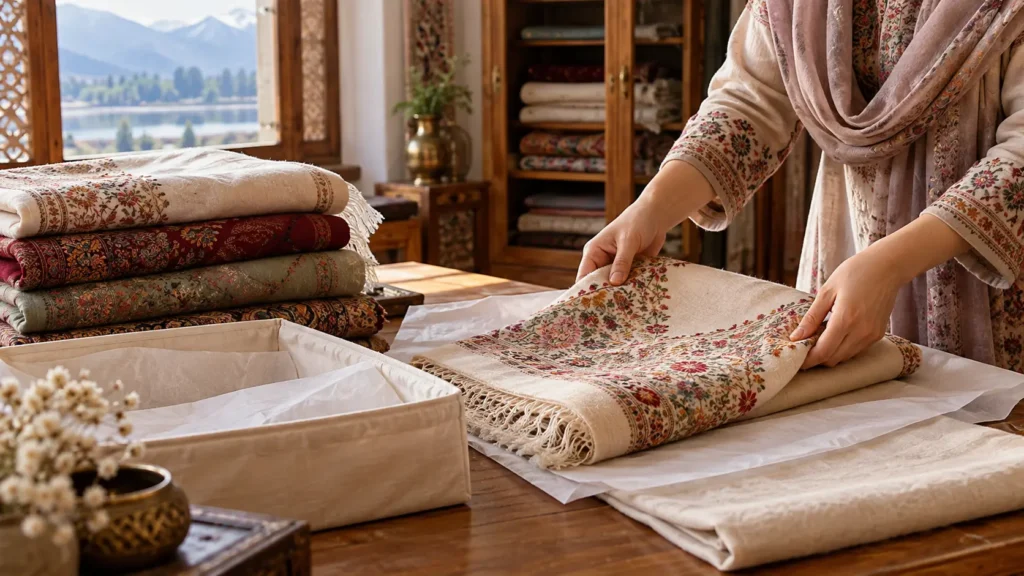
Every spring, many Kashmiri households put away their winter shawls, pherans and woollens to make room for lighter clothing. The shawls often end up in a cupboard, a wooden trunk or a suitcase until the weather turns cold again. The problem is that a shawl can look perfectly fine when you pack it away and still develop stains, a musty smell or moth damage by the time you take it out.
Storing Kashmiri shawls properly starts before they go into the cupboard. They need to be clean, completely dry and protected from insects, sunlight and unnecessary pressure. This matters even more for fine pashmina and embroidered pieces that are difficult or expensive to restore.
A few simple precautions can help you keep your shawls in good condition throughout the summer without buying special storage equipment.
Why Do Kashmiri Shawls Need Careful Storage?
A woollen shawl used every day through winter has a different set of storage needs from a fine pashmina reserved for special occasions. Both, however, can suffer if they are packed away carelessly for several months.
Natural fibres such as wool and pashmina can attract clothes moths. Sweat, skin oils, food residue and other organic traces can make stored garments more attractive to pests. Moisture can also cause problems when fabric remains damp in a closed space.
Embroidery adds another concern. Traditional Kashmiri shawls may feature delicate sozni work, fine borders or decorative threads that can catch, flatten or become strained under heavy items.
Before storing a shawl, consider what it is made of, how often you wear it and whether it has any existing damage. These details help you decide how to clean, fold and protect it.
How Should You Store Kashmiri Shawls During Summer?
To store Kashmiri shawls during summer, clean each piece according to its care instructions, let it dry completely and fold it loosely. Wrap delicate shawls in clean cotton or suitable acid-free tissue, then place them in a cool, dry cupboard away from direct sunlight, insects and dampness.
The process does not need to be complicated. What matters is avoiding the mistakes that can damage delicate fabric over several months.
1. Check Each Shawl Before Packing It Away
Start by taking all your winter shawls out of the cupboard and examining them in good light. Look along the edges, around the folds and through any embroidered sections.
A shawl worn regularly may have picked up dust, perspiration, perfume or small food stains without showing obvious signs of dirt. A piece worn only once or twice might still need attention before long-term storage.
Check for:
- Visible stains or discoloured patches.
- Musty smells that suggest a moisture problem.
- Loose embroidery, pulled threads or small tears.
- Tiny holes or other possible signs of insect damage.
Do not fold a damaged shawl and put it straight back into storage. A loose thread can catch on another garment, while an existing tear may become worse if the fabric is handled repeatedly. See our tailoring and embroidery page for related services.
Separate the pieces that need cleaning or repair from those that are already ready for storage.
2. Clean Your Shawls Before the Summer Break
One of the easiest mistakes is assuming that a shawl is clean because it looks clean. Residue from regular wear can remain in the fibres, especially around areas that touch the neck and hands.
The right cleaning method depends on the material and construction. A sturdy woollen shawl and a fine pashmina with hand embroidery should not automatically receive the same treatment.
Check the care label first. If the label recommends professional cleaning, follow that advice. Avoid putting a delicate shawl in a washing machine simply because the cycle is labelled gentle. Agitation, water temperature and unsuitable detergents can cause shrinkage, colour bleeding or distortion. The Woolmark Company's guide to washing wool explains how wool differs from other fabrics.
For expensive pashmina, antique shawls and pieces with intricate embroidery, professional textile care is often the safer choice. Our dry cleaning service is one option.
If a shawl has a stain, do not scrub it aggressively or apply bleach, strong stain removers or household cleaning products. These can affect the colour and texture. Ask a qualified cleaner how the stain should be treated before attempting anything at home.
A useful rule: clean a shawl before storing it for months, but never use a cleaning method that is unsuitable for its fabric.
3. Let the Fabric Dry Completely
Once a shawl has been cleaned, make sure it is thoroughly dry before folding it. Even slight dampness trapped inside a thick fold can lead to an unpleasant smell and may encourage mould if the storage conditions are poor.
If the care instructions allow air-drying, spread the shawl flat on a clean, dry surface in a well-ventilated room. Keep it away from direct sunlight and strong heat.
Avoid hanging a wet, heavy shawl. Its own weight can pull the fabric out of shape, particularly when the fibres are delicate.
Pay attention to thicker embroidered areas and folded edges, which may take longer to dry than the rest of the fabric. Do not rely on the surface feeling dry if the shawl has recently been washed and still feels damp underneath.
For homes in Srinagar, choose a storage area that stays dry and has no recurring dampness. If a cupboard smells musty or sits against a wall affected by moisture, deal with that problem before putting your shawls inside. You can also read about our laundry service in Srinagar.
4. Fold Pashmina and Embroidered Shawls Gently
The way you fold a shawl matters when it will remain in the same position for months. Tight folds can leave persistent creases, and repeated pressure on delicate embroidery may strain the threads.
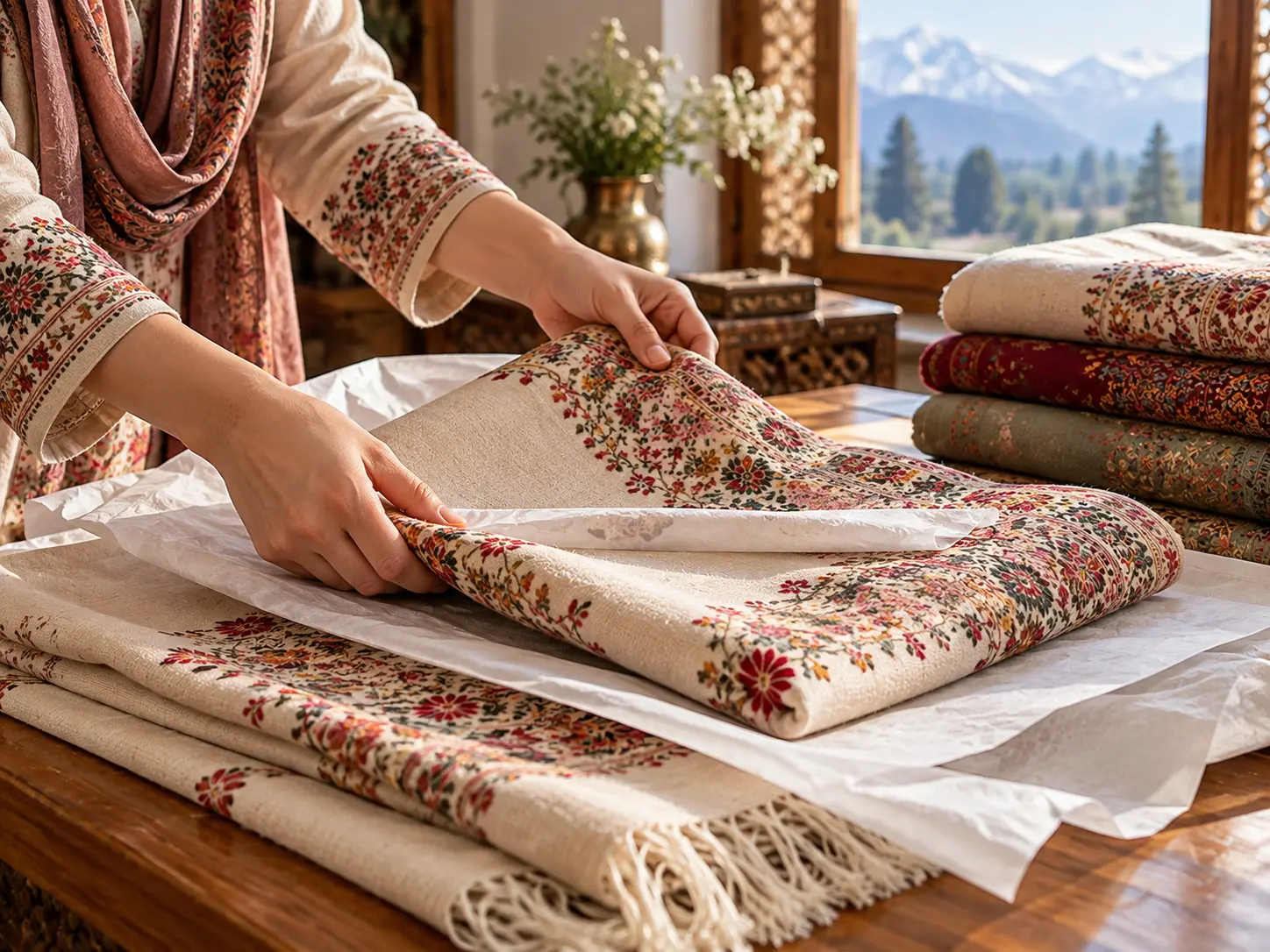
Lay the shawl on a clean, flat surface. Smooth it gently with your hands, then fold it into a loose rectangle that fits comfortably on the shelf or inside the storage container.
For a fine pashmina, avoid pressing down hard to make the bundle smaller. If the shawl has heavy embroidery or a decorative border, arrange the folds so that the most delicate areas are not repeatedly creased or trapped beneath thick layers of fabric.
A few practical differences are worth remembering:
- Pashmina shawls: Give them enough space to retain their natural texture. Avoid tight compression.
- Sozni-embroidered shawls: Use suitable acid-free tissue between folds to reduce friction and pressure on the embroidery.
- Everyday woollen shawls: Fold them neatly, checking for rough edges or fastenings nearby that could snag the fibres.
- Heavier shawls: Store them flat where possible, rather than leaving them hanging under their own weight.
If you have several valuable pieces, store them individually instead of piling them into one tightly packed bundle.
5. Choose the Right Cover or Storage Box
You do not need an expensive wardrobe organiser to protect your Kashmiri shawls. A clean cupboard or suitable storage box can work well when the location is dry and the shawls have been prepared properly.
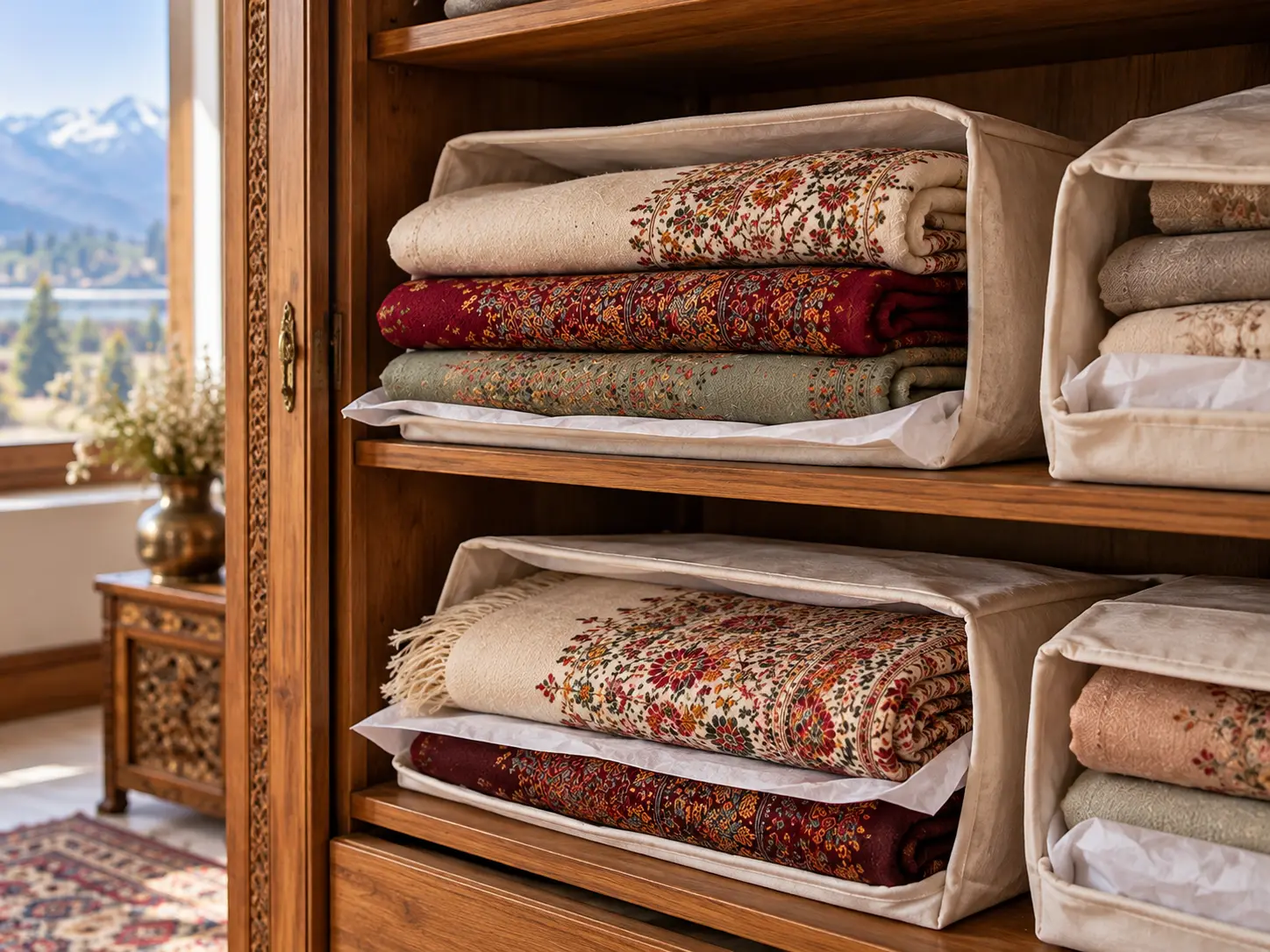
Clean cotton bags are a practical option because they allow air exchange. Acid-free tissue is useful for protecting delicate folds and embroidery. If you use a box, choose one that is clean, dry and suitable for textile storage.
Avoid putting a shawl into a sealed plastic bag while there is any possibility of trapped moisture. Plastic is not inherently unsuitable for every storage situation, but an airtight container can trap dampness if the fabric has not dried fully.
Also avoid newspaper, strongly coloured wrapping paper that may transfer dye, and scented materials that touch the fabric directly.
Before using an old suitcase or wooden trunk, inspect the inside. Remove dust, check for insect activity and make sure there is no musty smell. A traditional storage trunk is useful only when its interior is clean and dry.
6. Keep Moths and Other Insects Away
Finding tiny holes in a favourite shawl after several months of storage is frustrating. Clothes moth larvae can feed on natural animal fibres, and damage may remain hidden in folds until the garment is taken out again. The Mississippi State University Extension has a helpful note on clothes moths and carpet beetles.
Start with prevention rather than relying on repellents.
Clean the cupboard before returning the shawls. Vacuum dust from corners and shelf joints, and inspect the area for small insects, larvae or shed skins. Make sure the garments are clean before storing them, since food residue and body oils can make the storage environment more attractive to pests.
Cedar products and lavender sachets are sometimes used in wardrobes for their scent, but they should not be treated as reliable protection against an infestation. Keep them away from direct contact with delicate fabric.
Do not spray insecticides, room fresheners or moth repellents directly onto pashmina or embroidered shawls. If you discover signs of an active infestation, isolate the affected garments and seek appropriate advice before returning them to the cupboard.
7. Find a Suitable Place in Your Home
Many households store winter clothing on high cupboard shelves, inside trunks or in suitcases. Any of these can work, provided the location is dry, clean and protected from excessive heat and sunlight.
Avoid cupboards that are regularly damp, shelves near leaking pipes or areas where condensation forms. Do not leave a storage box in direct sunlight for extended periods, even if the shawls inside are covered.
Give your shawls enough room to sit without being crushed beneath blankets, heavy jackets or other winter clothing. If you are storing several pieces together, place the heavier items separately so their weight does not compress delicate embroidery. For bulky winter bedding, our home fabric care service can help.
You do not need to keep the shawls in an unusually cold room. A clean, dry cupboard in a suitable indoor space is generally sufficient. Stable conditions and protection from moisture matter more than elaborate storage arrangements.
8. Check the Shawls Occasionally
Once your shawls are packed away, you do not need to handle them every week. Still, it is sensible to inspect the storage area occasionally, particularly if your home has a history of dampness or insect problems.
Look for changes in smell, signs of pests or moisture inside the cupboard. If you notice a problem, remove the affected items and address the cause before storing them again.
Do not expose delicate shawls to direct sunlight just to air them out. If a shawl needs airing, follow its care instructions and use a clean, shaded, well-ventilated area.
A quick inspection during the summer can help you spot a problem early, rather than discovering it when you need the shawl for the first cold spell.
Common Mistakes to Avoid
Some storage habits seem harmless but can create problems over several months.
| Mistake | What to do instead |
|---|---|
| Packing away a shawl without checking for stains | Inspect it and arrange suitable cleaning before storage |
| Folding fabric that is still damp | Make sure it is completely dry first |
| Compressing a pashmina to save space | Fold it loosely and avoid heavy pressure |
| Storing shawls in a damp cupboard | Choose a clean, dry location |
| Hanging heavy shawls for the whole summer | Fold and store them flat where possible |
| Spraying perfume or insecticide on the fabric | Keep scented products and chemicals away |
| Ignoring small holes or loose threads | Inspect the shawl and arrange appropriate repairs |
When Should You Choose Professional Shawl Cleaning?
Not every shawl needs professional cleaning after every use. The decision depends on how frequently it has been worn, whether it has visible stains and what its care instructions recommend.
Professional help is worth considering when a shawl is made from fine pashmina, features intricate hand embroidery, has an old stain or has developed a persistent musty smell.
It is also a sensible option if you are unsure about the fabric or worried that washing it at home could cause damage.
When choosing a cleaner, ask whether they have experience handling pashmina, wool and embroidered textiles. Explain the material, point out any stains or loose threads, and ask how the shawl will be treated.
For households with several winter garments to prepare, arranging suitable cleaning before the main storage period can make the process easier. It also means you are not rushing to deal with several delicate pieces when winter is approaching. You can see our pricing and full services list, or read our guides on preparing your pheran for winter and cleaning woollen clothes the right way.
We offer doorstep pickup and delivery in HMT, Nowgam, Soura, Maloora, Humhama and Bemina.
Next Steps
Before putting your winter clothes away this year, set aside your Kashmiri shawls and check them one by one. Separate the pieces that need cleaning, make sure every shawl is completely dry, and prepare a clean storage space.
Give your finest pashmina and embroidered pieces a little extra attention. They may not need complicated care, but they do need the right conditions.
When the weather turns cold again, you will be glad to find your shawls clean, properly stored and ready to wear.
Dr. Good Day Luxcare Studio offers laundry and dry cleaning in Srinagar with doorstep pickup and delivery.
Book a Pickup WhatsApp UsQuestions? Contact us, learn about us, or read more garment-care tips on our blog.
Frequently Asked Questions
1. How should I store Kashmiri shawls during summer?
Clean your shawls according to their care instructions, let them dry completely, and fold them loosely. Store them in breathable cotton bags in a cool, dry cupboard away from sunlight and insects.
2. Can I store pashmina shawls in plastic bags?
Avoid ordinary sealed plastic bags for long-term storage, especially if moisture could be trapped inside. Clean, breathable cotton bags are a practical alternative for protecting delicate pashmina.
3. How can I protect Kashmiri shawls from moths?
Clean your shawls before storing them, remove dust from cupboard shelves, and inspect for signs of insects. Keep the shawls protected and check them occasionally throughout the summer.
4. Should I wash Kashmiri shawls before storing them?
Clean shawls that have been worn or have accumulated dust, perspiration, or stains. Follow the care label, as fine pashmina and intricately embroidered shawls may require professional cleaning.
5. How should I store embroidered Kashmiri shawls?
Fold them gently and place clean, acid-free tissue paper between delicate folds where needed. Avoid tight creases and heavy items on top, as pressure can damage the embroidery.