


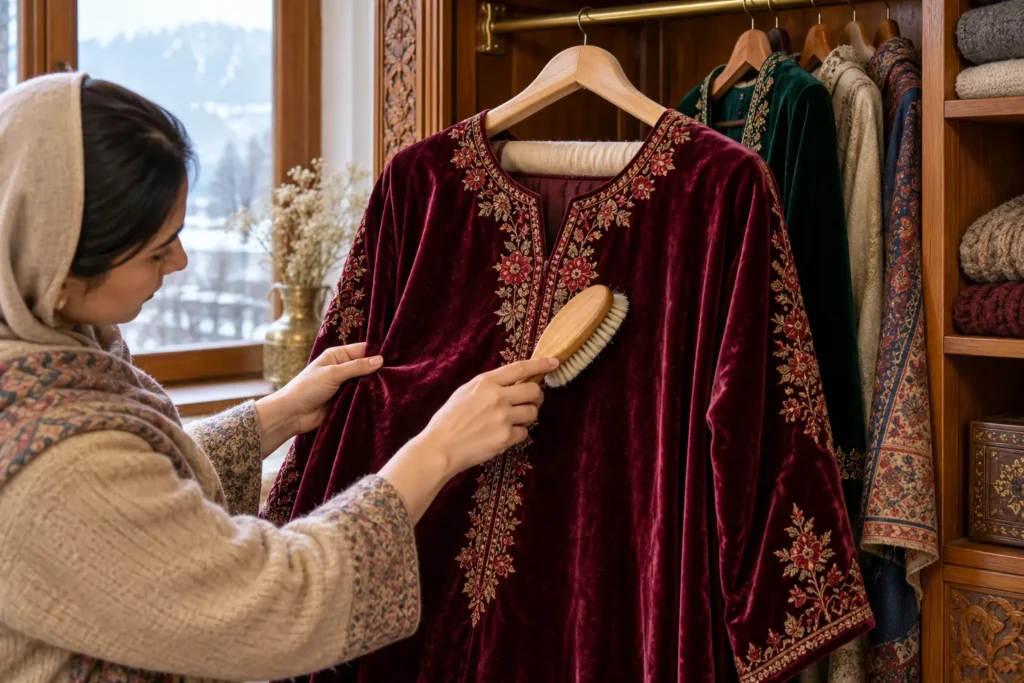
Velvet can lose its rich, plush appearance surprisingly quickly if it is washed incorrectly, pressed with a hot iron, or stored under heavy clothing. Knowing how to care for velvet clothes helps preserve their softness, colour, and distinctive texture, especially during Srinagar’s cold months when velvet pherans, suits, shawls, and occasion wear often come out of the wardrobe.
The secret is to protect the fabric's pile, the tiny fibres that give velvet its soft, light-catching surface. Once those fibres become crushed or damaged, restoring the original texture can be difficult.
Whether you wear velvet for weddings, family gatherings, winter outings, or everyday traditional clothing, a few careful habits can help your garments look their best for longer.
What Is the Safest Way to Care for Velvet Clothes?
The safest way to care for velvet clothes is to check the garment's care label, avoid rubbing or twisting the fabric, and keep its pile away from direct heat and heavy pressure. Brush lightly in the direction of the pile, treat spills promptly, and use professional cleaning when the label or construction requires it.
Why Velvet Needs Special Care
Velvet is recognised by its raised, dense surface. That surface gives the fabric its depth and soft finish, but it also makes velvet more sensitive to pressure, friction, moisture, and heat than many everyday fabrics. Velvet is also generally considered difficult to clean because of its pile.
The exact care method depends on the type of velvet. Cotton velvet, silk velvet, synthetic velvet, and stretch velvet can react differently to cleaning and ironing.
Here is what can go wrong when velvet is handled carelessly:
- Flattened pile: Sitting on a velvet garment for long periods or stacking heavy clothes on it can leave compressed patches.
- Water marks: Some velvet fabrics develop visible spots or changes in shading when exposed to moisture.
- Shine and heat damage: Direct ironing can crush the pile or leave an unwanted glossy finish.
- Colour changes: Strong detergents, harsh stain removers, and repeated rubbing may affect the fabric's colour.
- Distorted shape: Twisting, wringing, or hanging heavy wet velvet incorrectly can stretch the garment.
These problems are particularly frustrating with expensive occasion wear, embroidered velvet suits, and traditional garments that are difficult to replace.
Everyday Habits That Keep Velvet Looking New
You do not need to clean velvet after every wear. In many cases, careful handling and proper storage are enough to keep it fresh between uses.
1. Check the garment before cleaning
Start by reading the care label. Do not assume every velvet garment can be washed at home.
Look for instructions such as dry clean only, hand wash, or machine wash. Also inspect the garment for:
- Embroidery, tilla work, beads, sequins, or decorative trims.
- A lining that may react differently from the outer fabric.
- Stains around the collar, cuffs, underarms, and hems.
- Areas where the pile already looks flattened or shiny.
If the label recommends professional cleaning, follow it. This is especially important for structured velvet jackets, bridal wear, and heavily embellished Kashmiri clothing. Our guide to sozni and tilla embroidery care explains more about decorative work.
2. Remove dust with a gentle touch
Dust can settle into velvet's pile, particularly during winter when garments may stay in wardrobes for weeks.
Use a clean, soft clothes brush and make light strokes in one direction. Avoid scrubbing back and forth, as repeated friction can roughen the surface.
For loose dust, you can also shake the garment gently outdoors. Do not beat it or use a stiff brush to force particles out.
3. Let the garment breathe after wearing
After wearing velvet, allow it to air in a clean, dry, well-ventilated area before putting it away.
This helps release everyday odours and allows light moisture to evaporate. Keep the garment away from direct sunlight, heaters, and damp walls.
If you have worn a velvet pheran or suit during a long winter gathering, give it time to air before storing it. Avoid spraying perfume directly onto the fabric because it can leave marks or residue. Our pheran winter checklist has more seasonal tips.
4. Handle stains without rubbing
A small spill does not always require a full cleaning, but the wrong response can make it worse.
If liquid lands on velvet:
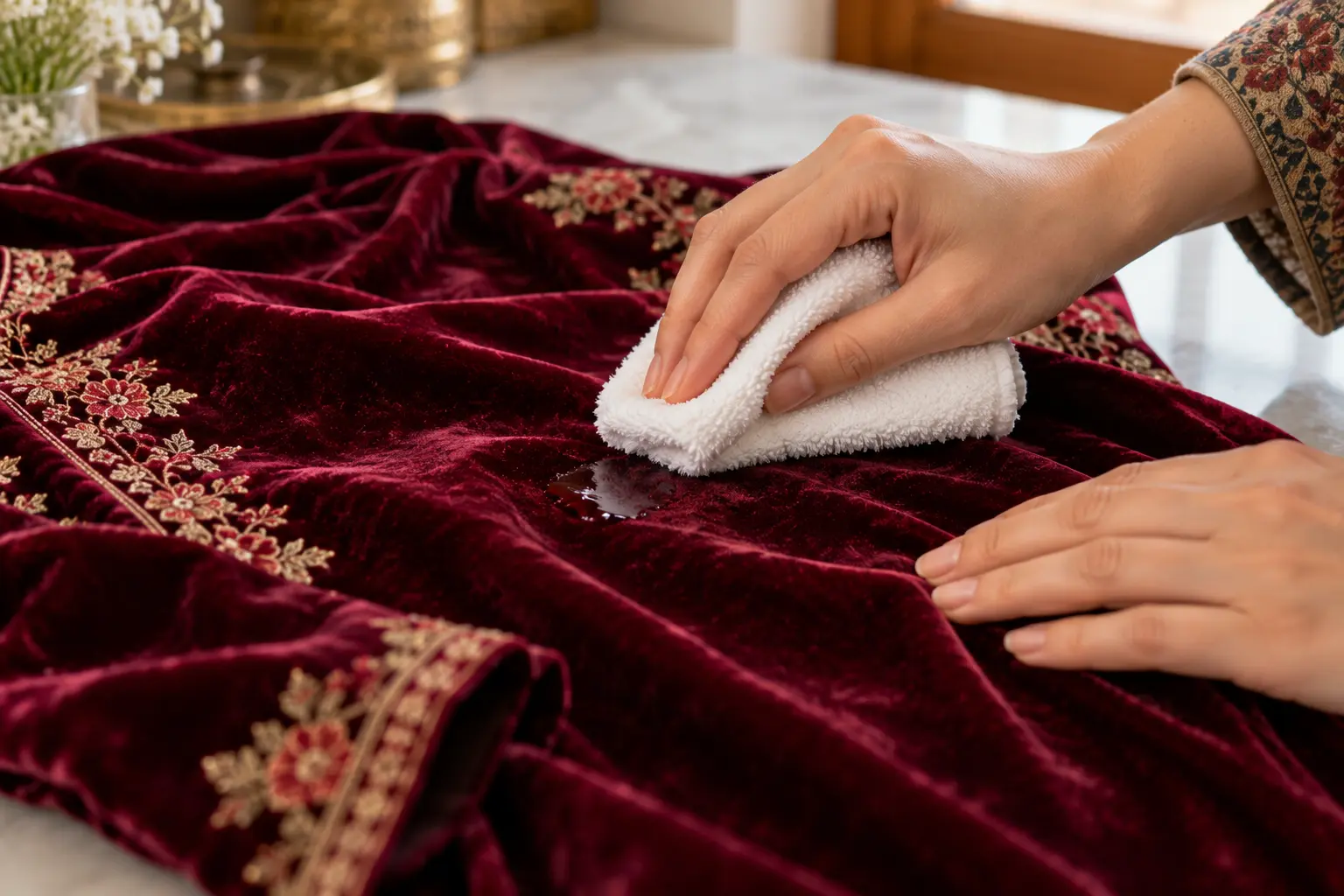
- Use a clean, absorbent cloth to blot the spill gently.
- Lift away excess liquid without pressing hard.
- Avoid rubbing, scrubbing, or spreading the stain.
- Check the care label before applying water or any cleaning product.
- Seek professional help for oily stains, ink, food spills, or stains on delicate velvet.
Do not use bleach or strong stain removers unless the garment's care instructions explicitly allow them. A product that works on cotton may damage velvet.
How to Wash Velvet Without Damaging Its Texture
Washing is where many velvet garments lose their original finish. Some velvet can be washed according to its care label, while other varieties need professional cleaning.
Can you wash velvet at home?
Check the label before deciding. If the garment is marked dry clean only, do not try to wash it by hand or in a machine.
For velvet that is explicitly labelled washable, follow the manufacturer's instructions. Keep these precautions in mind:
- Use a gentle detergent: Choose a suitable mild detergent and follow the care label's instructions.
- Avoid aggressive agitation: Scrubbing and twisting can damage the pile and distort the garment.
- Keep colours separate: Dark velvet can transfer dye, particularly during washing.
- Avoid unnecessary soaking: Prolonged exposure to water may affect the texture, backing, or shape.
- Never wring the garment: Remove excess water only as permitted by the care instructions.
Hand washing is not automatically safer than machine washing. The fabric construction, dye, lining, and finish all affect how a garment responds to moisture.
Should you put velvet in a washing machine?
Only if the garment's label specifically permits machine washing. Use the recommended cycle, temperature, and spin settings.
Avoid placing delicate, structured, or embellished velvet clothing in the machine without clear care instructions. Even a gentle cycle can cause friction between garments, while the spin cycle may leave permanent-looking creases or flattened areas.
For expensive velvet suits, wedding outfits, and traditional garments with embroidery, professional assessment is often the safer choice. Our dry cleaning service is one option, and you can read the difference between laundry and dry cleaning to see which suits your garment.
How to Remove Wrinkles Without Flattening Velvet
Wrinkles can make velvet look untidy, but direct heat can do more harm than the crease itself.
Use steam carefully
Steam may help relax wrinkles in some velvet fabrics, but the correct method depends on the fibre and care label.
If steaming is permitted:
- Hang the garment securely.
- Keep the steamer at the distance recommended by its manufacturer.
- Move it gently without pressing the steamer head against the pile.
- Avoid saturating one area with moisture.
- Allow the garment to dry completely before wearing or storing it.
Test an inconspicuous area first if the care instructions allow it. If the garment is labelled dry clean only or has delicate embellishments, ask a professional to handle the wrinkles.
Can you iron velvet?
Never press an iron directly onto velvet's raised surface. The pressure and heat can flatten the pile, create shiny patches, and leave marks that may not be reversible.
If the garment's care instructions permit ironing, follow the specified temperature and use the recommended protective method. Some fabrics require treatment from the reverse side or specialist equipment.
Do not assume that ironing inside out is always safe. Pressure can still affect the pile, and excessive heat may damage the backing.
What if the velvet pile is already flattened?
First, identify whether the area is simply compressed or has suffered actual heat or fibre damage.
- Light compression: The pile may recover with careful hanging, gentle brushing, or a suitable steam treatment if permitted.
- Deep creases: A garment-care professional can assess whether the pile can be lifted safely.
- Shiny or heat-damaged patches: These may be permanent, especially if the fibres have melted or become physically damaged.
Avoid rubbing the patch, applying a hot iron, or repeatedly steaming it in an attempt to restore the texture. Excessive treatment can make the damage worse.
The Right Way to Store Velvet Clothing in Srinagar
Storage matters just as much as cleaning. In Srinagar, velvet garments may be worn frequently during colder months and then remain stored for long periods as the seasons change.
Hang or fold velvet?
The best method depends on the garment's weight and construction.
Hang lightweight velvet garments when their shape and care instructions permit it. Use a suitable padded hanger for delicate shoulders, leave space between clothes, and avoid tight wardrobe arrangements.
Fold heavy velvet garments if hanging could stretch the shoulders or distort the shape. Fold them loosely in a clean, dry space, with breathable tissue or a suitable soft fabric between folds to reduce pressure and friction.
For heavily embroidered velvet suits or garments with bulky trims, avoid placing the weight of other clothes on top.
Protect velvet from dampness
Damp storage can encourage musty odours and mould, particularly when garments are put away before they are completely dry. The US Environmental Protection Agency's guide to mold and moisture explains why controlling moisture is the key to preventing mould.
To reduce the risk:
- Store velvet only when it is fully dry.
- Choose a clean, dry wardrobe with reasonable air circulation.
- Keep garments away from damp walls and areas prone to condensation.
- Avoid tightly sealed plastic covers for long-term storage unless the garment-care professional recommends a suitable protective system.
- Check stored garments periodically, especially after prolonged wet or humid weather.
Do not store velvet in direct sunlight. Prolonged light exposure can fade the colour, particularly in deep shades such as burgundy, navy, black, and forest green.
Prepare velvet before the next winter season
Before bringing stored velvet back into regular use, inspect it for dust, odours, stains, and flattened areas.
Air it in a dry, shaded, well-ventilated place. Brush lightly if appropriate, and address stains before they become more difficult to remove.
For special-occasion garments, arrange cleaning before the event rather than experimenting with home treatments at the last minute.
Caring for Velvet Pherans and Embroidered Clothing
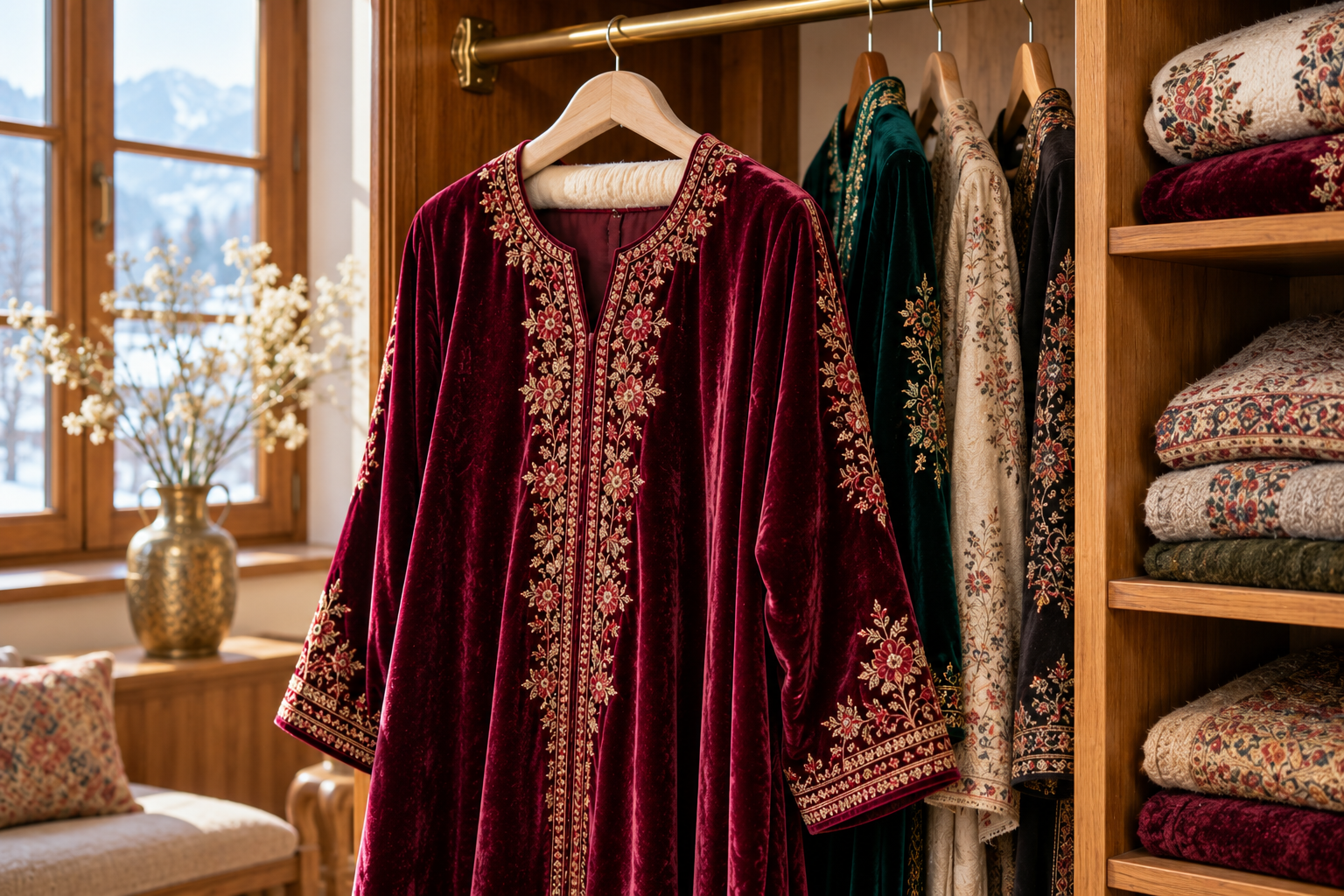
Velvet traditional wear needs extra attention when the fabric is combined with decorative work, linings, or heavy construction.
A velvet pheran or suit may include embroidery, tilla details, decorative borders, or embellishments that react differently to water, heat, and cleaning products than the main fabric.
Follow these precautions:
- Do not scrub embroidery: Rubbing can loosen threads, distort decorative work, or catch delicate details.
- Avoid home stain treatments on embellished areas: Cleaning solutions can affect metallic threads, dyes, adhesives, and backing materials.
- Protect the shape: Heavy garments should not be hung while wet unless the care method specifically permits it.
- Keep decorative pieces separate: Store garments so that beads, metallic trims, or rough fastenings do not rub against the velvet pile.
- Use professional cleaning when needed: Garments with complex construction or valuable embroidery should be assessed before cleaning.
For local customers in Srinagar, these precautions are useful for winter pherans, velvet wedding suits, festive outfits, and other garments that receive seasonal use. See our tailoring and embroidery page, and our guide to cleaning woollen clothes the right way for related garments.
Common Velvet Care Mistakes to Avoid
| Mistake | Why it causes problems | Better approach |
|---|---|---|
| Rubbing a stain | Flattens pile and spreads the stain | Blot gently and check the care label |
| Pressing with a hot iron | Can crush fibres and create shine | Use only a label-approved wrinkle treatment |
| Washing without checking the label | May damage dye, backing, or shape | Confirm the correct cleaning method first |
| Storing clothes while damp | Can cause odours and mould | Dry fully before storage |
| Packing garments tightly | Creates pressure marks and creases | Leave space or fold loosely |
| Using a stiff brush | Can roughen the pile | Use a soft brush with light strokes |
| Applying household stain removers | May cause colour loss or residue | Seek fabric-appropriate stain treatment |
A simple rule helps: when you are unsure how velvet will react, avoid experimenting on the visible surface.
When Should You Choose Professional Velvet Cleaning?
Home care is useful for light dust, careful storage, and routine maintenance. Professional cleaning is the better option when the garment's construction or the type of stain makes home treatment risky.
Consider professional garment care if your velvet clothing has:
- Oil, makeup, food, or ink stains.
- Persistent odours that airing does not remove.
- Heavy embroidery, tilla work, or decorative trims.
- Deep creases or crushed areas that do not recover with gentle handling.
- A care label that specifies dry cleaning.
For local customers, Dr. Good Day Laundry Service offers laundry and dry-cleaning services in Srinagar. You can visit drgoodday.com to explore the service and determine the appropriate care for your garment, check our pricing and full services list, or find a dry cleaner near you in Srinagar.
When handing over velvet clothing, point out existing stains, shiny patches, and flattened areas. Tell the garment-care team about any previous home treatments, too. This helps them assess the fabric before cleaning and set realistic expectations for the result.
We offer doorstep pickup and delivery in HMT, Nowgam, Soura, Maloora, Humhama and Bemina.
Next Steps: Keep Your Velvet Ready for Every Occasion
Before storing or cleaning a velvet garment, take three simple steps:
- Check the care label and identify any stains or damaged areas.
- Remove loose dust gently and avoid unnecessary washing or ironing.
- Choose suitable storage or professional cleaning based on the garment's condition.
A little attention after each wear can help your favourite velvet pheran, suit, or winter outfit retain its soft texture and rich appearance for longer. If a garment is expensive, embellished, or already showing damage, get it assessed before trying to restore it at home.
Dr. Good Day Luxcare Studio offers laundry and dry cleaning in Srinagar with doorstep pickup and delivery.
Book a Pickup WhatsApp UsQuestions? Contact us, learn about us, or read more garment-care tips on our blog.
Frequently Asked Questions
1. How often should velvet clothes be cleaned?
Clean velvet when it becomes visibly dirty, develops persistent odours, or needs attention after regular wear. It does not necessarily require cleaning after every use. Always follow the garment's care label.
2. Can I use a clothes brush on velvet?
Yes, if the fabric's care instructions permit it. Use a clean, soft brush and light strokes in the direction of the pile. Avoid stiff brushes and vigorous back-and-forth scrubbing.
3. How do I remove pressure marks from velvet?
Lightly compressed pile may recover through careful handling or a suitable steam treatment, if permitted by the care label. Deep creases and heat damage may be permanent. Avoid pressing the area with an iron.
4. Is dry cleaning better for velvet?
It can be appropriate for velvet garments labelled dry clean only, structured pieces, and delicate embellished clothing. However, not every velvet fabric requires dry cleaning. The correct method depends on the fibre, backing, dye, and garment construction.
5. How should I store velvet clothes during summer in Srinagar?
Clean the garment when necessary, make sure it is completely dry, and store it in a clean, dry wardrobe away from direct sunlight. Hang suitable lightweight pieces or fold heavier garments loosely to avoid stretching and pressure marks.